Rechercher dans ce blog

Wednesday, September 30, 2020

Intel And AMD: History Repeats - X86 Faces Obsolescence (NASDAQ:AMD) - Seeking Alpha

proc.indah.link

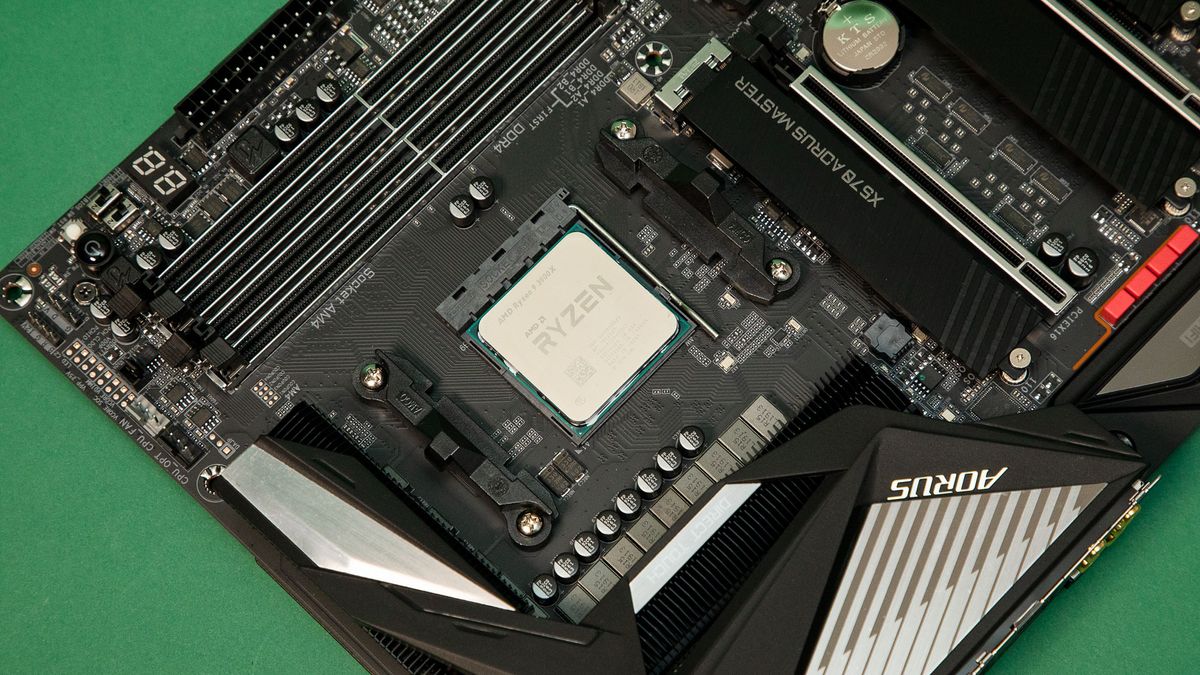
File:Intel Core i9-10900K.png - Wikipedia

I have long indicated that the ARM emergence was one of several risks faced by Intel (INTC).

A while ago, and also as predicted, that risk started materializing as Apple (AAPL) announced the migration of its Mac line (desktops and laptops) to its own ARM-based CPUs. That might have seemed like a small step, perhaps impacting less than 10% of an x86 market segment.

However, the ARM menace hasn’t gone away. Quite the opposite. The latest developments indicate that the x86 market might be about to enter a spiral from which it will not be able to recover. The x86 market might be facing obsolescence. This article will explain why.

A Matter Of Performance And Efficiency

There's something which ties most of the computing market nowadays. This is a continuous search both for more performance and more efficiency. From laptops to server rooms, for different reasons, we want a lot of performance, but we also want a lot of efficiency.

When it comes to laptops, the reason is that we want the longest possible battery life as well as the lowest possible weight and form factor. The lowest weight possible is tied to computing efficiency, as smaller batteries will take less space and weight. And efficiency also is tied to the smallest weight and size, because the more efficient computing is, the less heat is generated and so less cooling is necessary.

As for servers, efficiency is highly sought after as well. The highest the efficiency is for a given level of performance, the lower the electricity bill. Also, more efficiency means less heat, and less heat needs less cooling. So lower bills again, as well as lower investment outlays (for cooling systems). Moreover, lower cooling needs mean higher density, which again means lower investment costs.

Here’s the x86 Problem

x86 chips, provided mostly by Intel but also by AMD (AMD), have long dominated the PC, laptop and server markets. They did this by having much higher performance than the (rare) alternatives, which have been based on ARM designs.

However, ARM-based designs have long dominated the lower-power segments, up to and including tablets (and smartphones, IoT, embedded systems, below those). This domination was based on cost and efficiency.

As consumers have sought more power from their smartphones, and due to the extreme competition within that market, ARM-based solutions have evolved rapidly.

Led by Apple, those solutions have seen their performance increase rapidly, up to the point where even low-power solutions are now surpassing higher-power x86 chips. Also, since ARM designs run the rest of the mobile industry as well, ARM had to provide solutions which were competitive with those designed by Apple. ARM failed to do this for a long while, but with its A76 cores it started regaining grown. Thus, recently, even ARM started showing designs which became competitive with x86 chips.

So, recently, we reached a turning point:

  • Apple saw that its ARM-based chips were powerful enough to replace Intel chips on its Mac lines, with advantages both on performance and on efficiency. Also, since Apple will keep Intel’s margin, the advantages will extend to the margin and cost of these devices (making them either cheaper, higher-margin, or both). As a result, during 2021 and 2022 we will see Apple phasing out x86 (Intel) CPUs from all its Mac products.
  • Amazon.com (AMZN), after a rather weak Graviton chip, came up with Graviton2, with more modern ARM (Neoverse N1) cores. Graviton2 arguably reached parity on performance with x86 solutions, while besting them on energy consumption. The result was that Graviton2 instances became cheaper to run than their x86 equivalents.

Performance Parity And Beyond

Apple moving its entire Mac range to ARM-based chips shows that performance parity has been reached. The desktop and laptop segments typically see the highest-clocked x86 chips, and thus the highest single-core performances, yet Apple didn't fear the move. So we can be sure that Apple has met and beat the performance that was available from the fastest x86 chips.

At the same time, with ARM’s Neoverse N1 and Amazon.com’s Graviton 2 chip, based on it, we saw performance parity at the server room level. This was borne in many reviews and benchmarks, and I had concluded the same in my article titled “Amazon's Graviton2 CPU: This Time, It's For Real.”

I’ll point, for instance, to tests by Anandtech which compare the Graviton2 to older Amazon.com server instances, and where Graviton2 often pulls a small lead. I’ll also point to KeyDB’s similar findings. Of note, the Graviton2 was clocked around 20% below its intended (by ARM) clock rates, so there was likely a 20% performance buffer still available on that chip.

This performance parity was just the starting point. Of course, AMD and Intel aren’t standing still. But here’s the problem, ARM has just announced Neoverse V1 (and N2). Neoverse V1 chips will be available commercially in 2021.

Neoverse V1 is ARM’s first design in a long time where the chip balancing was more toward performance than power and area (which are more important factors for smartphone-like devices). The result was extreme. The Neoverse V1 will bring a +50% single thread performance increase over the Neoverse N1. And this performance increase was with both chips being run at 3 Ghz, so from Amazon.com’s Graviton2 (which runs at 2.5 GHz) levels, we’re looking at a +80% performance jump.

The Neoverse N1 was roughly at performance parity. The Neoverse V1 will put ARM-based server-room solutions well ahead of any comparable x86 solutions. This will rapidly be seen in Amazon.com’s Graviton3, as well as other chips like the SiPearl Rhea. These chips should start arriving in 2021.

Additionally, in 2021-2022 we also should start seeing the arrival of the Neoverse N2-based designs. These will provide a +40% performance uplift over Neoverse N1-based designs, at a lower area and power budget (than the Neoverse V1). This will allow for more cores per socket (128 cores, vs 96 for the Neoverse V1).

Finally, before someone says that some high-clocked Intel (and possibly AMD) desktop chips could still be much faster than these server cores, let me already dispel this notion. That only happens, because we're comparing desktop chips running at 4.8-5 GHz to a server chip at 2.5 GHz. Now, high core-count server ships cannot run at those frequencies. Hence, the Neoverse V1-based (and N2-based) solutions will, indeed, provide a significant performance uplift over AMD and Intel server room solutions.

The Other Shoe - Efficiency

We don’t have final numbers on this field. But the problem for x86 has been, and will still be, that these ARM chips are a lot less power hungry. That was the case with the Neoverse N1, where in some workloads it was up to 4x more efficient than x86 solutions. It will still be the case with the Neoverse V1 and N2 solutions, as that kind of lead is hard to lose. The same has already been stated by Apple as well, for solutions whose performance is higher than even the Neoverse V1’s.

More details on the Neoverse V1 and N2 will be given by ARM in its October 6-8 DevSummit conference. Those will likely include not just allusions to performance, but also to relative efficiency.

Conclusion

The x86 world is on the verge of losing the performance crown on all market segments. This will happen by Apple’s hand on the PC (desktop, laptop) market. And it will happen by ARM’s hand in the server room.

Once lost, this crown will be unlikely to be regained, as ARM’s platform roadmap continues to call for higher sequential performance gains than those promised by AMD or Intel. At the same time, Apple already has shown that a higher level of performance is possible even on the smartphone energy budget, and its laptop and then desktop chips will likely surprise even more on performance.

Concurrently, ARM solutions continued to be much more power efficient even when they reached performance parity. They look to keep that crown as well, while performance expands further.

The end result is that the x86 architecture looks to be significantly challenged. The challenge is even greater because ARM licenses its designs, so multiple ARM-based competitors will emerge, each reducing the laptop, desktop and server room fat margins.

This represents an extreme danger for Intel’s and AMD’s business (ex-GPUs and other segments, but not consoles as those will be exposed to the same dynamic). Arguably, within the next 5-10 years, the x86 architecture will go obsolete.

It seems extremely hard for Intel and AMD to turn this reality around. Instead, Intel and AMD seem to be in the same position, today, as Motorola and IBM were back in 1995 and 2005 when Apple decided to move its computers to Intel x86 CPUs. History is repeating.

Disclosure: I/we have no positions in any stocks mentioned, and no plans to initiate any positions within the next 72 hours. I wrote this article myself, and it expresses my own opinions. I am not receiving compensation for it (other than from Seeking Alpha). I have no business relationship with any company whose stock is mentioned in this article.

The Link Lonk


September 30, 2020 at 10:23PM
https://ift.tt/2ELQDlV

Intel And AMD: History Repeats - X86 Faces Obsolescence (NASDAQ:AMD) - Seeking Alpha

https://ift.tt/2YXg8Ic
Intel

AMD Ryzen 5800X and 5900X CPUs could be on sale and gunning for Intel on October 20 - TechRadar

proc.indah.link

AMD’s Ryzen 5800X and 5900X will lead the charge of next-gen Zen 3-based processors, and are set to hit shelves on October 20, according to the rumor mill – with a further source backing that date up, and mentioning the possibility of October 27.

The initial rumor here was floated on Twitter by Yuri Bubliy (who’s heavily involved in the AMD scene and created DRAM Calculator and ClockTuner for Ryzen), as highlighted by Videocardz.

If this speculation turns out to be correct – and take it with a suitably large dose of condiments – AMD’s plan is to reveal the Ryzen 5000 range on October 8, which we know is happening, followed by the launch of those two CPUs 12 days later.

Then the theory runs that there are another two processors launching in the initial batch of models, the Ryzen 5950X and mid-range 5600X, which will follow later (and presumably further CPUs won’t be too far behind that).

German tech site ComputerBase backs up Bubliy’s assertion that the initial on-sale date could well be October 20, but notes that it might come a week later on October 27 – and agrees on the two Ryzen models which will be arriving on shelves, but further adds that a third CPU could be present with the initial release (the 5600X would make sense).

Rise in rumors

We’d certainly advise caution around all of this, although we have been seeing the purported 5800X pop up quite a bit lately, including in an actual game benchmark most recently, with eye-opening results that will likely have Intel worried.

Note also Bubliy’s mention of next-gen Navi graphics cards, with the initial Radeon RX 6000 models expected to be out on shelves likely in the third week of November, following their initial reveal on October 28.

That sounds plausible, particularly if AMD wants to ensure that stock levels are better than Nvidia’s RTX 3000 launch – as promised – and so might want to wait a little while before kicking-off sales, but again, grab some fistfuls of salt here.

The Link Lonk


September 30, 2020 at 07:00PM
https://ift.tt/36izgoj

AMD Ryzen 5800X and 5900X CPUs could be on sale and gunning for Intel on October 20 - TechRadar

https://ift.tt/2ZDueh5
AMD

Better Buy: Advanced Micro Devices (AMD) vs. Intel Corporation - Motley Fool

proc.indah.link

Intel (NASDAQ:INTC) and AMD (NASDAQ:AMD) are the world's two largest producers of x86 CPUs for PCs and data centers. Intel traditionally dominates both markets, but several major mistakes have allowed AMD to gain ground in recent years.

When I compared these two chipmakers over three years ago, I declared AMD had more room to run than its larger rival. Since then, AMD's stock has surged nearly 500% while Intel's stock advanced by almost 50%. Let's see why AMD outperformed Intel by such a wide margin, and if that trend will continue over the long term.

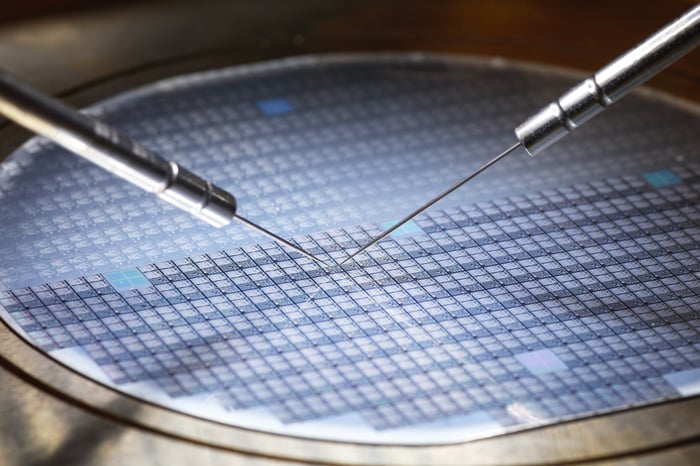
A wafer of chips being manufactured.

Image source: Getty Images.

How did AMD overtake Intel?

Between the third quarters of 2017 and 2020, AMD's share of the entire x86 CPU market surged from 22.3% to 37.4%, according to PassMark Software. During the same period, Intel's share declined from 77.6% to 62.5%, due to losses across the desktop, laptop, and server markets.

Intel manufactures its own chips at its internal foundry. But over the past few years, Intel's foundry has struggled to keep pace with Taiwan Semiconductor Manufacturing (NYSE:TSM), the world's largest contract foundry, in the "process race" to produce smaller and faster chips, which are measured in nanometers.

AMD, however, is a "fabless" chipmaker that outsources the production of its chips to leading foundries like Taiwan Semiconductor. In late 2018, Intel's troubled development of newer 10nm chips caused a shortage of its 14nm chips -- and frustrated PC makers started placing orders with AMD instead.

AMD, which didn't face any shortages because it relied on Taiwan Semiconductor to produce its top-tier chips, happily filled those orders. AMD also advanced from 12nm chips to 7nm chips last year as Intel remained bogged down in chip shortages and production delays.

This July, Intel disclosed its 7nm process was delayed, and the first chips wouldn't launch until 2022 or 2023. Intel claims its new 10nm chips are comparable to Taiwan Semiconductor's 7nm chips -- but Taiwan Semiconductor plans to produce 3nm chips by 2022. In other words, AMD's top CPUs will likely remain smaller, more power-efficient, and more price-efficient than Intel's CPUs for the foreseeable future.

Different types of leaders with different priorities

AMD's turnaround started after Dr. Lisa Su -- a veteran engineer who previously worked at IBM, Texas Instruments, and Freescale -- took over as its CEO in late 2014.

An artist's depiction of a CPU.

Image source: Getty Images.

Under Su, AMD launched its new line of Ryzen CPUs, which addressed the poor single-threaded performance of its previous Bulldozer CPUs and expanded into the server market with its Eypc CPUs.

AMD also launched a new line of Radeon gaming GPUs to keep pace with its main rival NVIDIA (NASDAQ:NVDA), and it continued selling APUs (which combine a CPU with a GPU) for Sony (NYSE:SNE) and Microsoft's (NASDAQ:MSFT) gaming consoles.

Meanwhile, Intel struggled under its former CEO Brian Krzanich, who abruptly resigned in mid-2018 due to an inappropriate relationship with an employee. He was succeeded by Bob Swan, Intel's CFO.

Unlike Krzanich, who had an engineering background, Swan leveraged his financial background to cut costs and spend billions on buybacks instead of aggressively resolving Intel's chip development and production issues.

The growth rates and valuations

AMD's revenue and adjusted earnings rose 4% and 39%, respectively, last year, as higher sales of its CPUs and GPUs offset the slower sales of its APUs for gaming consoles -- which were slowing down ahead of the upcoming launches of Sony and Microsoft's new consoles.

But analysts expect AMD's revenue and earnings to surge 33% and 72%, respectively, this year, as it continues to gain market share against Intel in CPUs, keep pace with NVIDIA in GPUs, and sell more APUs for the PS5 and Xbox Series X and S consoles.

Based on that rosy forecast, AMD's forward P/E ratio of 45 seems like a fair premium. AMD also didn't experience significant COVID-19 disruptions, since Taiwan Semiconductor manufactures its top chips in Taiwan -- a country that was well-insulated from the global pandemic.

Intel's revenue and earnings rose 2% and 6%, respectively, last year, as the growth of its data center-oriented chips offset the sluggish growth of its PC chips. Wall Street expects its revenue to rise 4% this year as its earnings stay roughly flat, due to the higher costs of resolving its R&D and supply chain issues amid a global pandemic.

On the bright side, Intel's stock only trades at 10 times forward earnings and pays a forward yield of 2.6%. That low valuation and high dividend might limit the stock's downside potential, but investors clearly aren't optimistic about its ability to keep pace with AMD and Taiwan Semiconductor.

The winner: AMD

AMD's stock isn't cheap, but it's wiser to bet on the hungry and well-run underdog than the fading market leader. Intel's business won't fall off a cliff anytime soon, but it needs a leader who will spend more cash on chip engineering than financial engineering if it wants to stay relevant.

The Link Lonk


September 30, 2020 at 06:30PM
https://ift.tt/3l2RduW

Better Buy: Advanced Micro Devices (AMD) vs. Intel Corporation - Motley Fool

https://ift.tt/2ZDueh5
AMD

This game-changing AMD storage freebie just got even better - TechRadar

proc.indah.link

It’s been a couple of weeks now since the latest version of AMD’s StoreMI software reached the mainstream. 

STOREMI_2.0.0.0113 BETA (as it is officially called) extends support for AMD’s Ryzen/Threadripper family (but not Athlon or Epyc) but has yet to support some of the older AMD chipsets.

Biostar has been the first one to publish an official list of AMD motherboards that supports StoreMI. However most recent motherboards with AMD chipsets should be compatible regardless. The software is free and is particularly useful for DIYers looking to essentially put together a hybrid drive (SSD and HDD) with the SSD acting as a cache. 

MiDrive

There’s no limit to the capacity of either and you should be able to use either a SATA or a PCIe SSD without having to reinstall Windows. A new caching system allows you to mirror your data to the SSD for speedup, a great way of avoiding corrupting and losing your data if the SSD fails for whatever reason.

Gamers as well as creatives will be able to benefit from such a setup by pooling together available storage resources. The end product is virtual storage that is not as fast as a pure SSD but offers a far bigger capacity.

Tests carried out earlier this year showed that boot times went down by 31% and game load times decreased by 13% compared to an HDD only setup. It would be interesting to see how RAID-0 setups of smaller SSDs combined with large slow spinning hard disk drives perform. 

For example, using two 128GB SSD in RAID-0, paired with one 8TB hard disk drive. Equally interesting would be to get a small but fast SSD combined with a slow but big SSD. Something like the MiDrive that Enmotus delivered earlier this year that combined SLC and QLC.

The Link Lonk


September 30, 2020 at 04:00AM
https://ift.tt/3ie3TNS

This game-changing AMD storage freebie just got even better - TechRadar

https://ift.tt/2ZDueh5
AMD

Tuesday, September 29, 2020

SnapDragon Apple Harvest Gets Underway - Southeast Produce Weekly

proc.indah.link

SnapDragon apples are ripe for picking as harvest season is officially underway.

Grown exclusively by Crunch Time Apple Growers, a New York State-based cooperative of 151 growers, this year’s SnapDragon crop is expected to yield its largest haul yet. The cooperative also announced the addition of direct market growers in five additional states — Michigan, Ohio, Iowa, Pennsylvania and Illinois — starting this year.

“The continued year-over-year growth that SnapDragon has experienced has us extremely confident in its performance this season,” Crunch Time Apple Growers Business Manager Jessica Wells said. “We know when retailers keep SnapDragon apples on the shelves consistently, consumers keep coming back again and again. We’re looking forward to another strong year with our largest crop yet.”

SnapDragon apples have demonstrated success among consumers and retailers, selling out every season since their release in 2014. To capture this bottom-line impact, Crunch Time Apple Growers partnered with Category Partners to study three leading East Coast retailers that provided consistent shelf space to SnapDragon during the prime-buying season from Dec. 1, 2019, to March 1, 2020. The findings showed:

  • 75% of premium apple sales are driven by three varieties, and one of them is SnapDragon.
  • SnapDragon performance in volume and dollars was substantially stronger than the composite of the top 10 premium varieties.
  • Retailers that maintained shelf space throughout the season saw consistent sales increases each week, with the most significant gains taking place in the third month of sales.
  • For retailers, revenue and volume consistently increased, indicating positive consumer reaction and sales performance built on repeat purchases.

“It comes down to the nature of the apple,” said fifth-generation farmer Joel Crist of Crist Bros. Orchards Inc. and Crunch Time Apple Growers board chair. “Its crunchy texture and sweet taste are extremely appealing. Coupled with a spicy undertone and hint of vanilla, SnapDragon makes for a unique eating experience that you just don’t find in other apple varieties. We are proud to grow SnapDragon apples and its cousin variety, RubyFrost, on our farm.”

The new direct market growers in the five new states will begin planting SnapDragon trees this year, expected to yield within the next three years.

“SnapDragon has been extremely well received at New York state farm markets, farmers markets and other direct-to-consumer outlets, creating raving fans across the state,” Wells said. “Growers across the country have seen the apples on the shelves at their local grocery stores and heard about them through various grower networks. There is tremendous excitement about these varieties among direct market growers and we are happy to welcome our new farms on board this year.”

New growers include:

  • Schwallier’s Country Basket in Sparta, Mich.
  • Lynd Fruit Farm in Pataskala, Ohio
  • Center Grove Orchard in Cambridge, Iowa
  • Cary’s Garden of Eatin in Urbana, Ill.
  • Frecon Farms in Boyertown, Pa.

For more information on where to buy and how to stock SnapDragon apples, visit snapdragonapple.com.

The Link Lonk


September 30, 2020 at 07:14AM
https://ift.tt/30BaLz9

SnapDragon Apple Harvest Gets Underway - Southeast Produce Weekly

https://ift.tt/3gnoK0A
Snapdragon

How the world's first foldable PC came to be - CNN

proc.indah.link

Years before we even heard whispers of a Galaxy Fold or a Z Flip, Lenovo and Intel had an idea. And one day, they put their minds together, along with their respective teams, to flush it out. What started out as an idea built out of pieces of cardboard morphed into, what they hope, is a revolutionary device: the world’s first foldable PC.

Tech enthused as we are, the possibility of a foldable PC you can pack up and tote around had us excited, to say the least. When Lenovo and Intel debuted the concept at the 2020 Consumer Electronics Show, we were no longer simply excited — we were impressed. Now, in an exclusive interview with CNN Underscored, Jerry Paradise, vice president of global commercial portfolio and product management at Lenovo, and Josh Newman, vice president of client computing group and general manager of mobile innovation at Intel, walk us through how the ThinkPad X1 Fold came to fruition.

The process — from ideation to cardboard mockups to hitting the market — has lasted four years, at least. And that’s a long time for a product, especially in the age of tech buzzwords. In that time, the mobile world has seen an equal share of excitement and disappointment when it comes to foldable devices. Now there’s the Galaxy Z Fold 2 (a standard phone that folds into a tablet), the Surface Duo (which pairs two screens together like two monitors) and the Z Flip (which goes from compact to full smartphone).

The ThinkPad X1 Fold — up for preorder starting September 29 for $2,499 — pushes past these with a punch into hyperdrive. Unfold it and use it as a tablet. Stand it up for a desktop experience. And even fold it in half to a right angle, lay the magnetic keyboard down and use it as a mini clamshell. “It’s how it transforms throughout the day, from a full tablet mode … to a clamshell and [the ability to] use it as a productivity device and transforming it into full productivity mode with it on my desk,” says Paradise.

PHOTO: LENOVO

The X1 Fold moves PC design forward and required a full two teams to make it happen. The Lenovo and Intel teams spent a lot of time together and went from “a few rough sketches on paper and a dream in somebody’s head” into concept devices, notes Paradise. At first, it was just cardboard cutouts. During the process, the team developed more than six different hinges, along with more than 20 variants of those. That’s because, as we’ve noted with foldable devices in the past, the hinge functionality is crucial. Ultimately, for the X1 Fold, the team settled on a multilink hinge that actually adds tension to the display when it’s fully unfolded. And it’s not the top polymer OLED layer of the screen stretching. Instead, it’s a five-layer display (the final being silicone) and carbon fiber panels beneath it. The result is a screen that feels rigid and has a backbone to absorb presses, taps and potential scratches. This display and the hinge work in tandem to deliver a seamless experience.

PHOTO: LENOVO

When we first got our hands on the X1 Fold back at the 2019 Consumer Electronics Show, the hinge operated smoothly with folding and unfolding. The display didn’t feel nearly as delicate as the first-generation Galaxy, nor did it come with the same warnings of how to use the display. The carbon fiber layer under the display was evident. That display wasn’t an easy feat, either, with Newman explaining the “plastic OLED obviously delivers stunning color [and is] very thin, but it also has challenges. … How do you keep the display very flat so that you have a great experience?”

Another huge challenge to creating a foldable PC: condensing the parts down. Think about Steve Jobs and the team at Apple figuring out how to get a massive vinyl collection into a tiny iPod. Sounds impossible at first thought, but Paradise and Newman were up to the challenge. “We had to solve lots of problems with board size and power and thermal. And, of course, a brand-new OLED foldable panel. It was just a different kind of laptop,” says Newman.

A traditional laptop has a lot of space — mainly found directly under the keyboard. That’s where the motherboard, processor, GPU, ports, storage and battery cells all have to fit. The X1 Fold effectively cuts that in half.

PHOTO: LENOVO

The big difference with the X1 Fold is how the processor sits. Traditionally, it’s a long piece of parts that gets soldered into a laptop, but with Lakefield (the code name for Intel’s Hybrid processors), Intel stacks the pieces to keep it super thin. “It’s a 12-by-12-by-1-millimeter package for the processor itself, and it’s a Foveros packaging technology,” says Newman. “We actually are stacking — so we have a compute layer, a memory layer, an I/O layer — so we can build up. That makes the package really small and the whole motherboard can shrink around it.” All of this fits inside the 11-millimeter thickness of this folding PC.

Since this device is within the ThinkPad family, it also had to meet durability needs as well as specific tests for a foldable. That means MilSpec out of the box (a set of standards for testing durability, ruggedness and reliability) and the traditional 200 torture tests that Lenovo puts ThinkPads through — tests like intense vibrations, high-altitude usage, extreme hot and cold temperatures and a number of drop tests. Lenovo paid close attention to the screen on the X1 Fold, though. “The carbon fiber plates that are sitting behind the display [are there to] absorb shock from behind the display,” Paradise says.

As with any foldable, various things will undoubtedly touch the display and potentially get sandwiched when it’s folded. The X1 Fold needs to stand up to paper clips, pens and other items getting stuck in between both displays. You don’t want them to crunch and cause irreversible damage to the display. When closed, with nothing in between, there is a small gap between the two halves. For now, this is the nature of folding devices.

But an optional accessory, which seems really necessary for getting the most out of the X1 Fold, can fill in that gap: the $299 Lenovo Fold Mini Keyboard. It just attaches to either side of the X1 Fold screen with magnets. You can leave it on 24/7 if you choose and, when you fold up the X1 Fold, it fills in that gap. Better yet, when on the display, it will also wirelessly charge through induction. It pairs to the X1 fold via Bluetooth, and positioning it on the left side and folding the right side gives you a clamshell-like experience. It even reminds us a bit of a netbook. And for ThinkPad fans, there’s no red dot for a mouse on this keyboard. It makes sense, though, as this is a fully touch-first device.

PHOTO: LENOVO

Something that was nonnegotiable from the start: Windows 10 on board. The Intel and Lenovo teams knew potential customers count on Windows and the app compatibility to get work done. Aiding in that experience is the Fold Mini Keyboard, which can make you feel more at home. “It has to be a ThinkPad first and foremost; it’s true if you put a keyboard on it, it can’t compromise as a PC. Application compatibility, what people expect from Windows all has to be there,” says Newman. “It had to be Windows 10 Pro; it had to have the full compatibility and capability of the PC. That way they don’t have to compromise — whatever you need to do within your enterprise you’re not going to be limited by having to figure out how to get those things to work. Not limited in the flexibility of what you can do with it, anyway.”

“The field [of potential customers] is going to be pretty broad,” adds Paradise. “We know all the early adopters are all over this. It hits a good tone with professionals, people that are going from consuming content to creating content. We see professionals latching on to this. It’s gonna resonate with early adopters, professional executives — probably first. But we expect, given the fact that it’s so versatile, that it will have broader appeal beyond those users as well.”

In other words, Lenovo and Intel are gearing this up for professionals and those with similar workloads. Though small, the X1 Fold still packs a PC-level punch. It’s powered by an Intel Hybrid processor, which the team paired with 8GB of RAM. The team also opted not to include a dedicated graphics processing unit, instead going for integrated Intel UHD Gen11 Graphics. That will be plenty of power for most productivity tasks: word processing, email, web browsing, enterprise apps, slide decks and crunching numbers in spreadsheets. But, considering it’s just integrated graphics, we wouldn’t call this a gaming PC.

Three ports — two USB-C ports and a SIM card slot — are built in. You can plug in a dongle to add in legacy ports. Included is a 65-watt power adapter that you’ll use to charge from either of the USB-C ports. Inside the ThinkPad X1 fold is a 50-watt-hour battery that’s split between the left and right sides.

Arguably, a bit more interesting is that SIM card slot, since the X1 Fold has 5G Sub6 and 4G LTE antennas inside. This means, with service, you can really use the X1 Fold anywhere. We’re also pretty impressed to see room for 5G in generation one of the X1 Fold. And if you want to take video calls on the fly, there’s a 5-megapixel HD camera that’ll work just fine.

PHOTO: LENOVO

The processor is a slimmer and more compact Intel Core Processor with Intel Hybrid Technology, but it can still scale up while being efficient. “The biggest thing is the hardware guided scheduling in the processor, [which] is really just constantly looking at the most power-efficient way to run whatever workloads are there,” says Newman. “The Hybrid Technology allows us to operate in a much lower power range than a core processor in traditional notebook design. It’s a Sunny Cove core for incredibe single-threaded performance and four lower-power Tremont cores — lower power but fully compatible Intel architecture,” Newman says. This Hybrid processor setup allows for the X1 Fold to decide which hardware it taps into for the best experience with whatever you’re trying to accomplish. This way the PC can amp up to handle a massive spreadsheet and pull it back for a simple Netflix stream.

As a whole, we think Lenovo is on to something here. Partnering with Intel allowed two teams with a rich history to really put their minds together and deliver the world’s first foldable PC. That’s an accomplishment in its own right, but we imagine that what was learned here will touch countless other devices.

And it’s not one that Lenovo will be leaving unwatched. “We have started many categories in our history; we’ll be committed to this space as well,” says Paradise.

“Continuing to try new categories and try new ways of bringing experiences together is going to be crucial for Lenovo to continue this kind of work so we can enrich more people’s lives in more ways,” Newman adds.

The Link Lonk


September 29, 2020 at 05:07PM
https://ift.tt/345oyyI

How the world's first foldable PC came to be - CNN

https://ift.tt/2YXg8Ic
Intel

Keysight's (KEYS) PathWave Test Solutions Adopted by MediaTek - Yahoo Finance

proc.indah.link

Keysight Technologies, Inc. KEYS is riding on momentum of its innovative software solutions.

The company recently announced that its PathWave Signal Generation software has been utilized by MediaTek, which is a Taiwan-based notable fabless semiconductor company. The aim was to accomplish physical layer interoperability development testing (IODT) based on 3GPP release 16 5G new radio (NR) criteria.

MediaTek’s Dimensity 5G-integrated chip platform leveraged Keysight’s PathWave Signal Generation for 5G NR software to develop a physical layer algorithm pertaining to 3GPP Release 16 specifications.

The software, also termed Signal Studio, is compliant with the latest 3GPP 5G NR standards. This enables customers, including chipmakers, to design “waveform files for characterization, testing of transmitters and receivers in base stations and wireless devices.”

Markedly, device makers designing products for advanced 5G applications cannot do away with IODT. Moreover, the 3GPP physical layer IODT breakthrough is imperative to the design and development of 5G NR features, including improved multiple-input, multiple-output (eMIMO), dynamic spectrum sharing (DSS), beamforming,  positioning, and carrier aggregation (CA), in advanced applications.

Keysight’s 5G expertise and solutions aid semiconductor companies, such as MediaTek, with innovative 5G testing technologies, which facilitate fast connectivity, low-latency and high reliability, to design superior 5G chip solutions.

Evolving technologies such as multi-cloud architecture, SD-WAN, and software as a service (SaaS) applications, require secure network and robust architecture. Amid the coronavirus crisis triggered remote working wave, it has become imperative for semiconductor companies to deliver robust 5G devices. This requires advanced testing platforms to measure the performance and security of networks and application services.

These factors are expected to bolster the demand for Keysight’s PathWave Signal Generation software, which is easy to implement and operate. This, in turn, will drive the top line in the days ahead.
 

Keysight Technologies Inc. Revenue (Quarterly)

Keysight Technologies Inc. Revenue (Quarterly)

Keysight Technologies Inc. revenue-quarterly | Keysight Technologies Inc. Quote

Further, expanding collaboration with MediaTek is likely to aid the company in expanding presence in Asia Pacific. Notably, Keysight is enabling MediaTek to accelerate validation processes for chipsets pertaining to mmWave and sub-6GHz frequency bands.

Expansion in Portfolio Augurs Well

Keysight, which currently carries a Zacks Rank #2 (Buy), is strengthening its product portfolio with focus on augmenting software testing capabilities. You can see the complete list of today’s Zacks #1 Rank (Strong Buy) stocks here.

During the fiscal third quarter, Keysight concluded the acquisition of Eggplant from The Carlyle Group with an aim to boost software test automation capabilities.

The company is also well poised to gain from incremental adoption of latest support solutions, including Keysight Care that is expected to fuel gross margin expansion in the days ahead. Moreover, incremental adoption of the company’s latest innovative PathWave Test 2021 software holds promise.

Also, robust growth in Software and services revenues, which represented more than 30% of total revenues in third-quarter fiscal 2020, is driving Keysight’s business model, bolstering recurring revenue growth and leading to expansion in gross margins.

Moreover, the company is benefiting from accelerated 5G commercial deployment, which is leading to improvement in orders from 5G device and design developers. Further, expansion of investments in O-RAN (or Open Radio Access Network) and virtualization technologies augurs well.

Increasing investments in 5G infrastructure is fueling demand of its testing and emulation solutions. Moreover, momentum in semiconductor measurement solutions driven by allegiance of semiconductor companies to develop chips on next-generation process technologies bodes well.

These factors position Keysight well to benefit from 5G NR network collaborations with Qualcomm QCOM, Xilinx XLNX and AT&T T. This, in turn, will also help the company in fortifying presence in the global 5G network emulation market.

However, the coronavirus outbreak led global supply chain disruptions and macroeconomic weakness in aerospace and defense vertical, and Huawei related headwinds are anticipated to weigh on Keysight’s near-term prospects.

Just Released: Zacks’ 7 Best Stocks for Today

Experts extracted 7 stocks from the list of 220 Zacks Rank #1 Strong Buys that has beaten the market more than 2X over with a stunning average gain of +24.3% per year.

These 7 were selected because of their superior potential for immediate breakout.

See these time-sensitive tickers now >>


Want the latest recommendations from Zacks Investment Research? Today, you can download 7 Best Stocks for the Next 30 Days. Click to get this free report
 
ATT Inc. (T) : Free Stock Analysis Report
 
QUALCOMM Incorporated (QCOM) : Free Stock Analysis Report
 
Xilinx, Inc. (XLNX) : Free Stock Analysis Report
 
Keysight Technologies Inc. (KEYS) : Free Stock Analysis Report
 
To read this article on Zacks.com click here.
 
Zacks Investment Research

The Link Lonk


September 29, 2020 at 09:25PM
https://ift.tt/36jvv1G

Keysight's (KEYS) PathWave Test Solutions Adopted by MediaTek - Yahoo Finance

https://ift.tt/3e1uOdC
Mediatek

Featured Post

Intel Falls on Latest Server Chip Delay; Rival AMD Gains - Yahoo Finance

proc.indah.link (Bloomberg) -- Intel Corp. fell after saying a new version of its Xeon server chip line will go into production in 2022, r...

Popular Posts