Rechercher dans ce blog

Tuesday, March 2, 2021

RISC-V Is On a Roll. Is It Ready to Take a Seat Alongside Intel, AMD, and Arm? - Data Center Knowledge

proc.indah.link

RISC-V, the emerging open source instruction set architecture for processors that have so far been used mostly as accelerators, is suddenly on a roll and appears about ready to become competitive in the CPU arena.

The most activity has been in the hacker space. A year ago about the only way to play around with a RISC-V processor was to spend $1,000 for a development board from the RISC-V-based startup SiFive. These days, SparkFun, BeagleBoard, Pine64, Rios, and others have either already released or are about to release single-board computers powered by RISC-V silicon, and at prices as low as $15. There's even a BBC Doctor Who-based RISC-V mini computer, meant for kids to learn coding and sold for under $100.

"That rollout is going to continue with lots of vendors," Mark Himelstein, CTO at RISV-V International, told DCK. "Some of them are small, like SparkFun, clearly an embedded kind of thing -- like the tiniest Raspberry Pi. Then the BeagleBoard stuff starts showing up as something you can run Linux on. You're gonna see people doing things through a whole range of deployments, first for development and then actually deploying these things."

Data Center Bound

RISC-V is already in the data center, and not only as accelerators, but pulling duty as CPUs. For example, some HPC networks use RISC-V to process data in transit. It also appears to be on the way to another role, powering servers, where its low power consumption could make it especially useful for edge deployments.

"There have been [RISC-V-based] cloud servers already," Himelstein said. "Alibaba does that already -- them and some other people."

Soon he expects to see the architecture powering everything from smartphones to HPC systems.

"I know people are working on that stuff, because they've talked at a bunch of our conferences," he said, "and they've come to our meetings asking about pieces that they care about that fit into those kinds of workloads."

According to Himelstein, the reason more RISC-V servers aren't already emerging has less to do with the architecture's readiness than with the time it takes hardware manufacturers to develop products and bring them to market. It can take a year or so to bring an embedded product to market, he said. It's more like five years for a server.

"It's the product runway that dictates that," he said. "People have been working on things for a while, so, as those time periods come to an end you're going to start seeing a lot of products out there with a lot of RISC-V in them.

"I think success begets success," he added. "When people see somebody else doing something, and doing something novel and unique, or something that advantages them, then they try to do it too."

Modular Design

Much of the work being done right now to help put RISC-V on equal footing with Intel, AMD, and Arm revolves around developing extensions, which are part of the chip's modular design. Extensions can be seen as plug-ins chip designers can use to add functions to a chip that can be called on by software when needed. While some extensions offer functions unique to RISC-V, others include functions found in other types of chips.

For RISC-V, this modular design is partly a way of escaping the technical debt that's baked into the design of other architectures. Since these functions can be pulled or redesigned as needed, they'll never be a burden that RISC-V chip makers will have to carry long term as part of their legacy.

Because some extensions are extremely complex and have the potential to negatively affect performance if not designed with care, they must go through a rigorous approval process. Until recently, this has included even simple and straightforward extensions that can easily be integrated into a chip's design without performance concerns.

For the latter, RISC-V International has developed a Fast Track program, unveiled last week, for streamlining approval of these small extensions. As the name suggests, Fast Track greatly reduces the time needed to have an extension approved.

"Fast Track maintains the necessary checks and balances to ensure extensions are properly designed and adhere to RISC-V’s architectural approach, while paving the way for RISC-V International to rapidly expand its set of standardized extensions," Greg Favor, co-founder and CTO of Ventana Micro Systems, explained in a statement.

Alongside Fast Track's announcement, the first extension to take advantage of the process, ZiHintPause, was introduced. It's an extension that software developers can activate to reduce a chip's power consumption under certain circumstances, an especially useful feature for IoT or edge devices where power concerns are an issue.

Hardware Freedom

Himelstein said that the same dynamics that drives developers to open source software is attracting hardware companies to adopt open source RISC-V.

"You're seeing more products being put out there and it's in everything from IoT to HPC," he said. "That's because RISC-V gives you freedom. It gives you freedom to choose the things you want; it gives you freedom from the constraints of some of the other architectures; it gives you freedom financially, at some level, on the stock to build the chip and do all those things.

"There's a lot of freedom it gives you, and people really like that. They learn to like that through Linux in the software world, and now they're going, 'Wow, I can do this in the hardware world. Oh my God, this is phenomenal.'"

The Link Lonk


March 01, 2021 at 08:08PM
https://ift.tt/3072cLM

RISC-V Is On a Roll. Is It Ready to Take a Seat Alongside Intel, AMD, and Arm? - Data Center Knowledge

https://ift.tt/2YXg8Ic
Intel

1 Reason Why You Should Buy the Dip in AMD Stock - Motley Fool

proc.indah.link

Advanced Micro Devices (NASDAQ:AMD) stock has stumbled out of the gate in 2021. Shares of the chip giant are down about 6% year to date, underperforming the broad market by a wide margin.

AMD Chart

Data by YCharts.

That's surprising as AMD is about to deliver yet another year of outstanding growth. The company has been dominating Intel in the CPU market and is sitting on favorable trends in the GPU (graphics processing unit) space where demand is substantially outpacing supply. It could also win big in server processors.

However, these are not the only catalysts for AMD in 2021. The arrival of a new generation of gaming consoles from Microsoft (NASDAQ:MSFT) and Sony (NYSE:SNE) is also turning out to be a major tailwind for the company -- one that could help the chipmaker exceed its own expectations as it supplies chips for both devices.

The new gaming consoles are witnessing unprecedented demand

The PlayStation 5 and Xbox Series X consoles have been setting the sales charts on fire in recent months. The PS5, for instance, sold 4.5 million units in less than 50 days since its launch on Nov. 12, according to Sony's fiscal 2020 third-quarter report.

The company expects its PS5 console to break the record of its predecessor and to exceed sales of 7.6 million units by the end of March. That would be slightly higher than the 7.5 million PS4 units Sony sold from Nov. 2013 through Mar. 2014. According to another estimate, Sony might ship as many as eight million new consoles by the end of this month, though that would depend on the company's ability to procure more components amid a global shortage of chips.

The long-term picture also seems bright. The PS5 is expected to clock consistently strong sales in the coming years and may eventually top 200 million units shipped per third-party forecasts. The PlayStation 2 has been Sony's best-selling console to date with lifetime shipments of approximately 159 million units, while the PS4 has reportedly shipped around 115 million units. The PS5 has a real shot at dethroning its predecessor in the long run as there are millions of console users in an upgrade window.

Microsoft's Xbox Series X, on the other hand, is also witnessing strong early demand. Niko Partners estimates that Microsoft moved 3.5 million units of its new console in November and December of last year. The firm points out that the figure would have been higher had Microsoft not underestimated demand and produced more consoles. Management says the new Xbox is likely to be in short supply until July this year with the company reportedly selling out every console that it made last quarter.

All of this indicates that the new gaming hardware is likely to remain in high demand, which bodes well for AMD's enterprise, embedded and semi-custom (EESC) business.

Keyboard button saying Buy stock

Image source: Getty Images.

And that demand has created a massive tailwind for AMD

AMD's EESC revenue shot up 176% year over year in the fourth quarter to $1.28 billion (the segment had delivered recorded just 7% revenue growth in the prior-year period). AMD management credited a ramp-up in the sales of semi-custom chips for this tremendous performance on the Jan. 26 earnings conference call:

Semi-custom sales increase year over year and sequentially based on strong demand for the next generation Sony and Microsoft consoles. Our semi-custom SoC sales are ramping faster than the last console cycle, and we expect sales to be better than typical seasonality in the first half of this year based on the current strong demand.

This indicates that the EESC business can continue to clock high growth rates in 2021, and that's great news for AMD as this segment produced 40% of total revenue last quarter. By comparison, the EESC business accounted for only 22% of the top line in the fourth quarter of 2019 when the new console cycle had yet to arrive.

Thanks to the rapid expansion of this business, as well as other growth drivers in CPUs and GPUs, analysts covering AMD stock have increased their earnings estimates significantly in the past month.

AMD EPS Estimates for Current Fiscal Year Chart

Data by YCharts.

At the same time, the stock has become cheaper because of its pullback. AMD is now trading at 42 times trailing earnings, way below the 2020 average earnings multiple of over 120. This should make AMD very attractive to growth investors as it aims to deliver 37% revenue growth in 2021 after last year's 45% increase.

This article represents the opinion of the writer, who may disagree with the “official” recommendation position of a Motley Fool premium advisory service. We’re motley! Questioning an investing thesis -- even one of our own -- helps us all think critically about investing and make decisions that help us become smarter, happier, and richer.

The Link Lonk


March 02, 2021 at 09:10PM
https://ift.tt/3sHAstj

1 Reason Why You Should Buy the Dip in AMD Stock - Motley Fool

https://ift.tt/2ZDueh5
AMD

BOXX Introduces AMD Ryzen™ Threadripper™ PRO Workstation - GlobeNewswire

proc.indah.link
Austin, March 02, 2021 (GLOBE NEWSWIRE) -- BOXX Technologies, the leading innovator of high-performance computer workstations, rendering systems, and servers, today introduced APEXX Everest, a workstation featuring the new, 64-core AMD Ryzen™ Threadripper™ PRO 3000WX Series processor. The most versatile AMD desktop platform ever, Ryzen Threadripper PRO also delivers state-of-the-art multi-threaded performance. BOXX is one of the first workstation manufacturers to ship systems equipped with the powerful new processor.  “The new AMD Ryzen Threadripper PRO provides an outstanding platform for APEXX Everest,” said BOXX VP of Sales & Marketing Bill Leasure. “The number of processing cores and innovative features found in Threadripper PRO will empower VFX artists, animators, and motion media editors, as well as architects and engineers, to create faster than ever before.”   With support for up to 128 PCIe® lanes and a boost GHz of 4.2, AMD Ryzen Threadripper PRO gives APEXX Everest unprecedented, multi-processing power for demanding 3D content creation workflows. Whether rendering complex 3D scenes, powering simulation, or quickly rebuilding assemblies, AMD's 64-core Ryzen Threadripper PRO enables APEXX Everest users to experience full spectrum compute capability rivalling competing dual socket systems. The BOXX workstation also supports up to four, professional-grade GPUs: AMD® Radeon Pro™ or NVIDIA® RTX™ (including Ampere, NVIDIA’s 2nd generation RTX architecture). Additional features include multiple hard drive options, up to 2TB of system memory, and IPMI for remote system management. Highly configurable, APEXX Everest delivers outstanding performance for multi-threaded applications like Autodesk® 3ds Max®, Maya®, and Revit, as well as Avid®, Adobe CC, DaVinci Resolve, Cinema 4D, and V-Ray.  “Incredibly versatile and blazing fast, APEXX Everest is the pinnacle of workstation performance,” said Leasure. “By integrating the latest technology like AMD Ryzen Threadripper PRO and NVIDIA Ampere RTX, BOXX is empowering creators to work more efficiently, accelerate renders, enjoy more time for iterations, and crush deadlines. With Everest, the possibilities are limitless.” For further information and pricing on APEXX Everest, contact BOXX at 1-877-877-2699. Learn more about AMD Ryzen Threadripper PRO processors, BOXX solutions, finance options, and how to contact worldwide BOXX resellers by visiting www.boxx.com. About BOXX TechnologiesBOXX is the leading innovator of high-performance computer workstations, rendering systems, and servers for engineering, product design, architecture, visual effects, animation, data science, and more. For 25 years, BOXX has combined record-setting performance, speed, and reliability with unparalleled industry knowledge to become the trusted choice of creative professionals worldwide. For more information, visit www.boxx.com.AMD, Ryzen, Threadripper PRO, Radeon, and combinations thereof are trademarks of Advanced Micro Devices, Inc.  AttachmentAPEXX 4_HeroJohn Vondrak BOXX Technologies 5128523326 jvondrak@boxx.com
The Link Lonk


March 02, 2021 at 09:00PM
https://ift.tt/3q6q2l5

BOXX Introduces AMD Ryzen™ Threadripper™ PRO Workstation - GlobeNewswire

https://ift.tt/2ZDueh5
AMD

Lenovo ThinkPad T14s (AMD) review: A solid 14-inch business laptop with good battery life Review - ZDNet

proc.indah.link

Lenovo's laptop portfolio can appear daunting, not least because the designs are pretty consistent across the range. Still, support for AMD processors in the 14-inch ThinkPad T14s is relatively rare, so although Intel CPUs are also available, I opted for an AMD model to review. 

The AMD-based ThinkPad T14s can accommodate up to 32GB of RAM and 1TB of PCIe SSD storage, and there are touch-screen variants with Lenovo's PrivacyGuard, which limits screen viewability. Intel-based ThinkPad T14s models, by contrast, offer up to 2TB of SSD storage and Thunderbolt 3 support on their USB-C ports. There's also a 4K screen option, while the AMD T14s doesn't go above FHD.

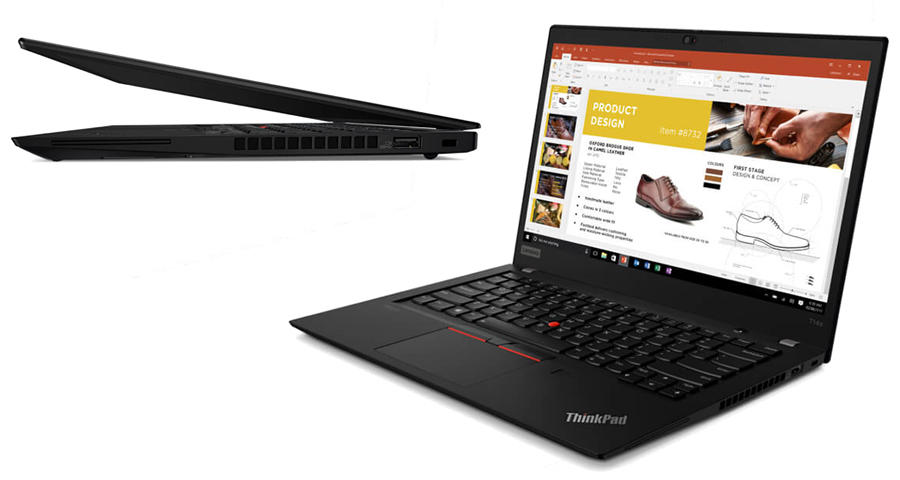
lenovo-thinkpad-t14s-amd-main.jpg

The ThinkPad T14s runs on AMD Ryzen 5 Pro 4650U or Ryzen 7 Pro 4750U processors with integrated AMD Radeon Graphics (Intel-based models are also available). The FHD 14-inch screen is available at 250 nits (non-touch), 300 nits (touch), 400 nits (non-touch, low power) and 500 nits (touch, with PrivacyGuard).

Images: Lenovo

Design-wise, the ThinkPad T14s looks like a typical ThinkPad -- black chassis with silver ThinkPad logo in one corner, with a red light-up dot for the 'i' in 'ThinkPad'. 

The magnesium alloy chassis makes this a sturdy laptop, which has passed MIL-STD 810G testing. The ThinkPad T14s is also relatively lightweight for a 14-inch laptop, at 1.27kg. It's thin, too: 16.1mm for the non-touch version, or 16.7mm with a touch-screen.  

My review unit was a non-touch model and so lacked PrivacyGuard, which is only available on the 500-nits touch-screen variant. From past experience, PrivacyGuard (which can be toggled on and off using a Fn key), renders the screen unreadable to anyone who isn't looking at it head-on. Two other Lenovo privacy features are present in all T14s variants: a ThinkShutter sliding cover for the webcam and a fingerprint scanner to the right of the touchpad. 

The screen configurations also have a very slight effect on the desktop footprint: touch-screen units measure 226.15mm by 328.8mm, while non-touch models come in at 225.8mm by 329mm. 

Top ZDNET Reviews

The 14-inch screen sits in what are by today's standards rather deep bezels. The bottom bezel is the deepest by some distance, while the upper bezel leaves more than enough room for the webcam. The overall look is workaday rather than sleek. 

All screen options share the same FHD (1,920 x 1,080) resolution and have a non-reflective finish, which is welcome. Brightness levels range from 250 nits to 500 nits for the touch-screen/PrivacyGuard option. The lower screen brightness won't suit everyone, so consider your choice carefully. 

Sound is output by a pair of 1W speakers with small grilles on the underside of the chassis. Audio is also pushed up through the keyboard , so there was no audio muffling when working with the ThinkPad T14s on my lap. There's plenty of volume, and while bass tones are a bit lacking there's no distortion at 100% loudness. 

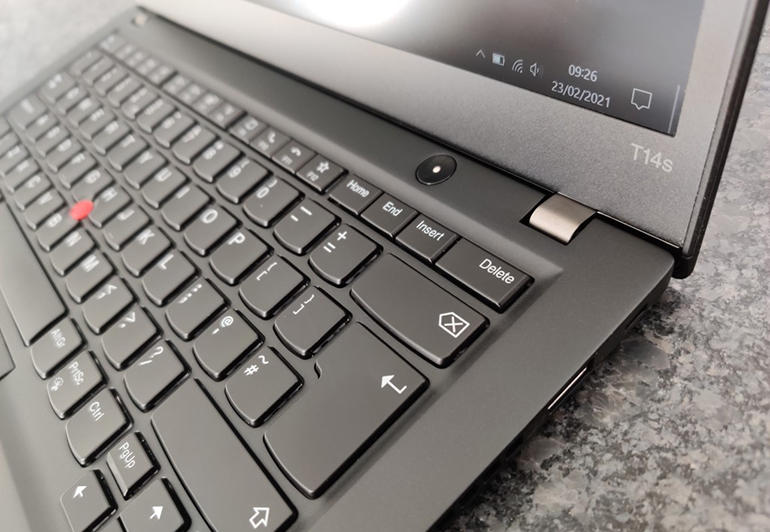
lenovo-thinkpad-t14s-gen-1-keyboard.jpg

The LED backlit, spill-resistant keyboard is a highlight, delivering a firm and responsive action.

Image: Sandra Vogel / ZDNet

The keyboard is up to Lenovo's usual high standards. The large pot-bellied QWERTY keys are easy to hit at speed, the Enter key is double height and wider than the standard keys and the Fn row keys are larger than you might expect. The Fn row has two dedicated keys for making video calls as well as one for turning the microphone on and off, all of which will be handy as we rely so much on video calling rather than in-person meetings these days. As usual for Lenovo, there's a shortcut to the Windows snipping tool on the PrtSc key.  

The keys emit a slight click when used, but typing is a relatively quiet process. The action is springy and bouncy, with no flex in the keyboard, and touch-typing is no problem. There's a TrackPoint between the G, H and B keys, with three buttons above the touchpad for use with it. 

The AMD Ryzen 7 Pro 4750U processor powering my review sample did a fine job. It kept multiple browser windows open, allowed me to stream video without pause, and let me to do all of my usual web-based and other productivity tasks with no waiting or other issues. My review model came with 16GB of RAM and a 512GB SSD and a 400-nit non-touch display. The cost of this configuration is £1,395 (ex. VAT; 1,674 inc. VAT) in the UK, or $1,588.80 in the US (with current discount applied). 

SEE: Windows 10 Start menu hacks (TechRepublic Premium)

Battery life is very good, too. Lenovo claims that the 57Wh battery will last for up to 17.4 hours and my usual three-hour workload test -- which involves writing into web apps, browsing, and streaming music and video -- drained a full battery by just 19%. That suggests a total battery life of just under 16 hours, which is impressive.  

Rapid charging with the 65W adapter will, Lenovo says, take the battery from 0% to 80% in an hour. I tested rapid recharging at a random point during a working day, when the battery was at 59%. After 15 minutes it had reached 73% (+14%), and after half an hour it had recharged to 85% (+26%). 

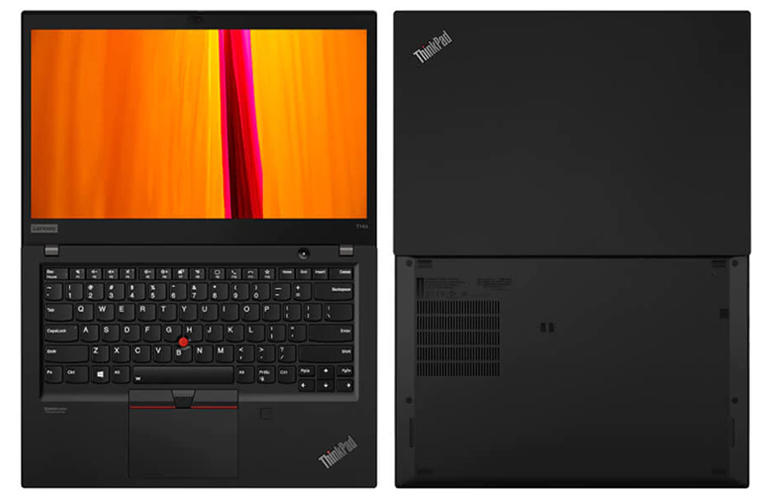
There are two USB-C ports, one of which will be occupied when the laptop is charging, and two USB 3.2 ports, plus a full-size HDMI port and a Lenovo docking connector that can also provide Ethernet connectivity via a proprietary cable. There's also a 3.5mm audio jack. A smartcard reader is an optional extra, as is 4G LTE mobile broadband.  

lenovo-thinkpad-t14s-amd-main2.jpg
Images: Lenovo

Conclusions

An excellent keyboard, solid build and good performance are real plus points for the AMD-based ThinkPad T14s, while PrivacyGuard screen viewing protection is nice if you're prepared to pay for the 500-nits touch-screen. Battery life is good too, and there are plenty of ports and connectors. But if you want a 4K screen, Thunderbolt 3 support or a 2TB SSD, you'll need to choose an Intel-based model.

RECENT AND RELATED CONTENT

Lenovo adds to ThinkPad range with updated X13 and X13 Yoga

Lenovo ThinkPad X1 Fold review: An innovative shape-shifting tablet/laptop

Lenovo ThinkPad X13 Yoga Gen 1 review: A compact and flexible business 2-in-1

Best CES 2021 laptops: Top notebooks, 2-in-1s, and ultraportables

Best laptop in 2021

Read more reviews

The Link Lonk


March 02, 2021 at 03:21PM
https://ift.tt/3b6WLm2

Lenovo ThinkPad T14s (AMD) review: A solid 14-inch business laptop with good battery life Review - ZDNet

https://ift.tt/2ZDueh5
AMD

Monday, March 1, 2021

The Intel SSD 670p (2TB) Review: Improving QLC, But Crazy Pricing?!? - AnandTech

proc.indah.link

In December, Intel announced a wave of new products based around its 144-layer 3D NAND and second-generation 3D XPoint memory, however these were all enterprise focused, and we've been waiting for a consumer variant to come to market. That product has now arrived: the Intel SSD 670p.

This is Intel's third generation of consumer NVMe SSD to use QLC (four bit per cell) NAND flash memory. The new 670p is the biggest update yet, bringing not only the next generation of QLC NAND, but also a major upgrade to the SSD controller. The Intel SSD 670p is launching today as a retail product, and will be used by major PC OEMs starting in April. Based on the pricing, it looks like Intel is solely targeting OEMs with this device.

Intel's QLC Efforts: Past to Today

As a brief refresher, the first consumer QLC SSD was the Intel SSD 660p, launched in 2018 and based on their 64-layer 3D QLC and the Silicon Motion SM2263 controller. This drive (and the similar Crucial P1) proved that QLC NAND was a viable choice for entry-level consumer NVMe SSDs. Since then, that market segment has been largely divided between DRAMless TLC drives that are preferable at lower capacities, and QLC SSDs with DRAM caches that are competitive at and above 1TB.

In late 2019, Intel introduced a follow-up 665p. This upgraded to 96L QLC to provide slightly improved performance and endurance. The 512GB capacity was dropped and the firmware was tweaked to allow for larger SLC cache sizes on partially-filled drives. The 665p turned out to be a pretty short-lived drive: Intel announced in August 2020 that the 665p would be discontinued with a last-order date at the end of January 2021. Meanwhile, the 660p is still on the market.

Intel 670p: A New Budget QLC Offering

Bringing us to the present, the new Intel 670p is rolling out with Intel's latest QLC NAND as well as a much-needed update to the SSD controller. Because the 665p is already off the market, Intel's marketing materials for the 670p take the unusual approach of comparing the 670p against the earlier 660p and largely ignoring the existence of the 665p, allowing Intel to slightly overstate the generational improvements and re-announce some advances (such as the larger SLC caches) that were already introduced by the 665p. The 670p brings back the 512GB capacity (ill-advised as it may be) and appears to be intended as a more complete replacement for the 660p.

The 670p is PCIe 3.0 x4 drive, desite it being new to market. This is because it reimagines Intel's positioning in the budget NVMe market, and going to something faster is seen as a premium play today.

Intel SSD 670p Specifications
Capacity 512 GB 1 TB 2 TB
(tested)
Controller Silicon Motion SM2265G
NAND Flash Intel 144L 1Tbit 3D QLC
DRAM Nanya 256MB DDR3L-1866
Form-Factor, Interface single-sided M.2-2280
PCIe 3.0 x4, NVMe 1.4
Sequential
Read (MB/s)
QD64 3000 3500
QD1 2200 2200
Sequential
Write (MB/s)
QD64 1600 2500 2700
QD1 1250 1700
Random
Read IOPS
QD64x4T 110k 220k 310k
QD1 20k 20k 20k
Random
Write IOPS
QD64x4T 315k 330k 340k
QD1 54k 54k 54k
Warranty 5 years
Write Endurance 185 TB
0.2 DWPD
370 TB
0.2 DWPD
740 TB
0.2 DWPD
SLC Cache Minimum 6 GB 12 GB 24 GB
Maximum 70 GB 140 GB 280 GB
Recommended
Customer Price
$89.99
(18¢/GB)
$154.99
(15¢/GB)
$329.99
(16¢/GB)

As we detailed last month, Intel's new 144L QLC NAND is a considerable improvement over their 96-layer generation. Aside from the density increase, it brings slightly lower read latencies, more significant improvements to write latency and throughput, and a few other features to improve performance. The density increase should help further reduce costs, but Intel has fallen behind the rest of the industry in the layer-count race and had to adopt triple-deck string stacking in order to reach 144 layers, so their cost savings won't be as significant as competitors who should be able to reach similar QLC densities with their double-deck designs of 162-176 layers.

Terminology Info: NAND companies build 'decks' of 32-96 layers of bits, and then combine decks to get a total number of layers. Building more layers in a single deck is difficult, and so combining decks gives a higher total number of layers. Typically the companies that can put more layers in a single deck are said to have a more advanced process. Most companies use two decks to reach 150+ layers, while Intel uses 3 decks of 48 layers in this product to reach 144 layers .

The new 144L QLC has also enabled Intel to increase their write endurance ratings again. The 670p's write endurance is 23% higher than the 665p and 85% higher than the 660p, at roughly 370 write cycles. Which spread out over 5 years, works out to 0.2 drive writes per day (DWPD). More importantly, at 0.2 DWPD Intel's QLC SSDs aren't that far behind the 0.3 DWPD that most consumer TLC SSDs are rated for.

Intel QLC SSD
Write Endurance
  512GB 1TB 2TB
660p 100 TB 200 TB 400 TB
665p   300 TB 600 TB
670p 185 TB 370 TB 740 TB

While the new NAND in the 670p certainly helps, it owes most of its improved performance to the upgraded SSD controller. The SM2263 controller used in the 660p and 665p is a low-cost 4-channel controller, appropriate for the entry-level market segment but seriously outdated. In particular, it is limited to IO speeds of 667 MT/s between the controller and the flash, which means that even with the fastest flash it cannot come close to saturating the PCIe 3.0 x4 host interface and struggles to go beyond about 2.4GB/s.

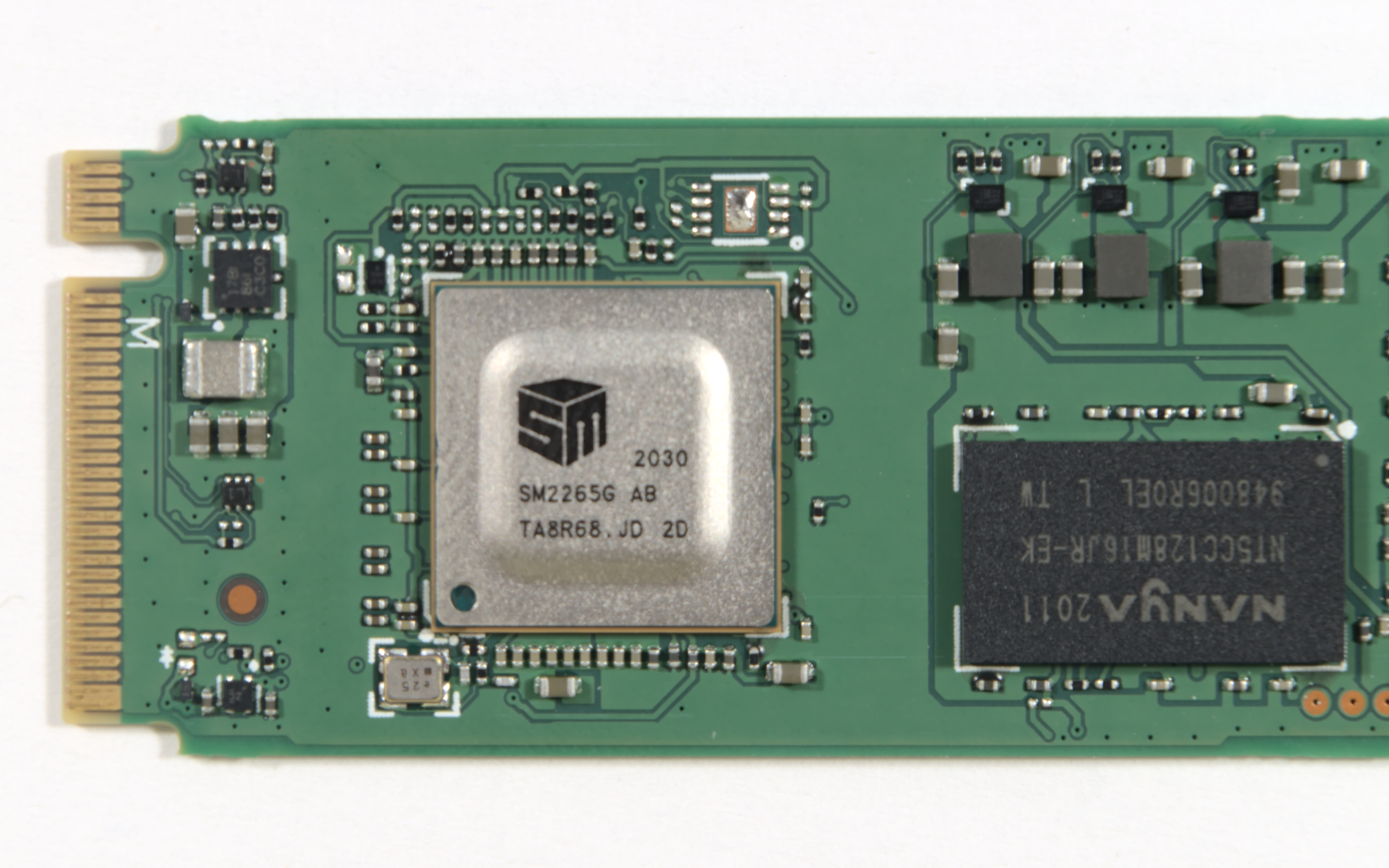
For the 670p, Intel has switched to the Silicon Motion SM2265. This controller hasn't been officially announced or documented by Silicon Motion, but a few references to it have popped up previously (though half of them are typos of the SM2256 SATA SSD controller). During the press briefing Q&A for the 670p, Intel stated the controller was a SM2262—the 8-channel controller from the same generation as the SM2263. So it's possible that the SM2265 is a more compact packaging of an SM2262 variant, much like the Phison E12S that's now used on many drives to make room for four NAND packages on the top side of the M.2 PCB.

Also possible is that the SM2265 may be more closely related to the SM2264 and SM2267 PCIe 4.0 controllers. The SM2267 is a four-channel controller and one of the first shipping PCIe 4.0 SSD controllers that is aimed at mainstream market segments rather than the high end. The package size for the SM2265 is the same as the SM2263 and SM2267 which suggests it's a four-channel controller (though the SM2267 actually has a higher pin count than the SM2262), and the performance means it would have to be supporting a higher IO speed on those four channels: closer to the SM2267's 1.2 GT/s rather than the 667 MT/s supported by the SM2263. In terms of features, the SM2265 seems to be a better fit with the SM2262/2263 generation: PCIe 3.0 instead of PCIe 4.0 and 8 queues instead of 15. The SM2265 may have inherited the upgraded error correction capabilities that Silicon Motion developed for the SM2264/2267 generation to better support QLC NAND. Overall, the SM2265 appears to be a mix of old and new, producing an updated low-cost controller that's better-suited to the remaining use cases for PCIe 3.0.

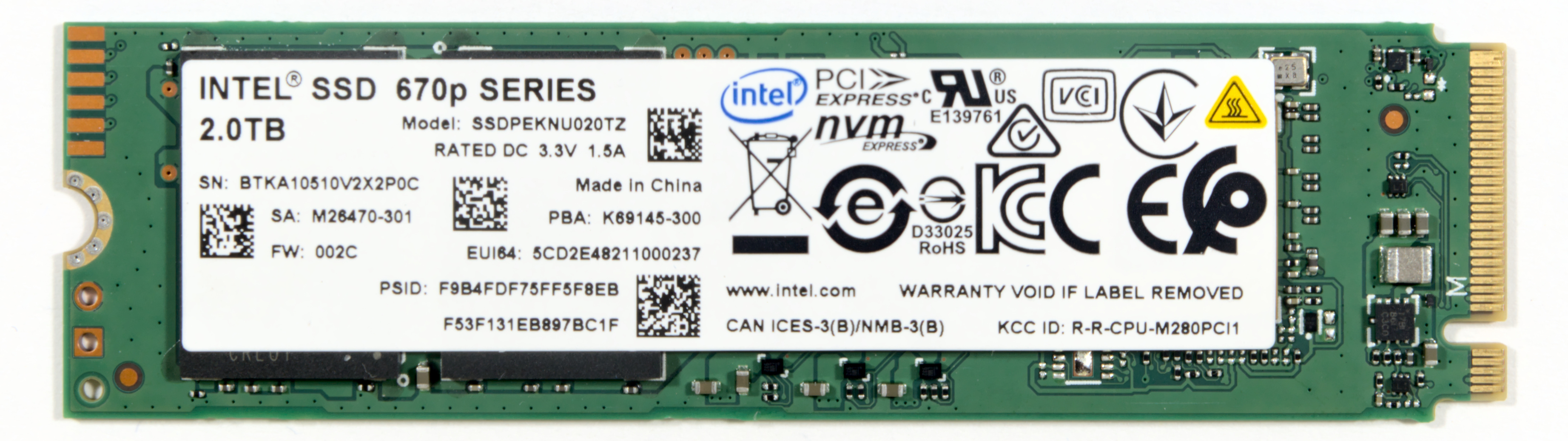
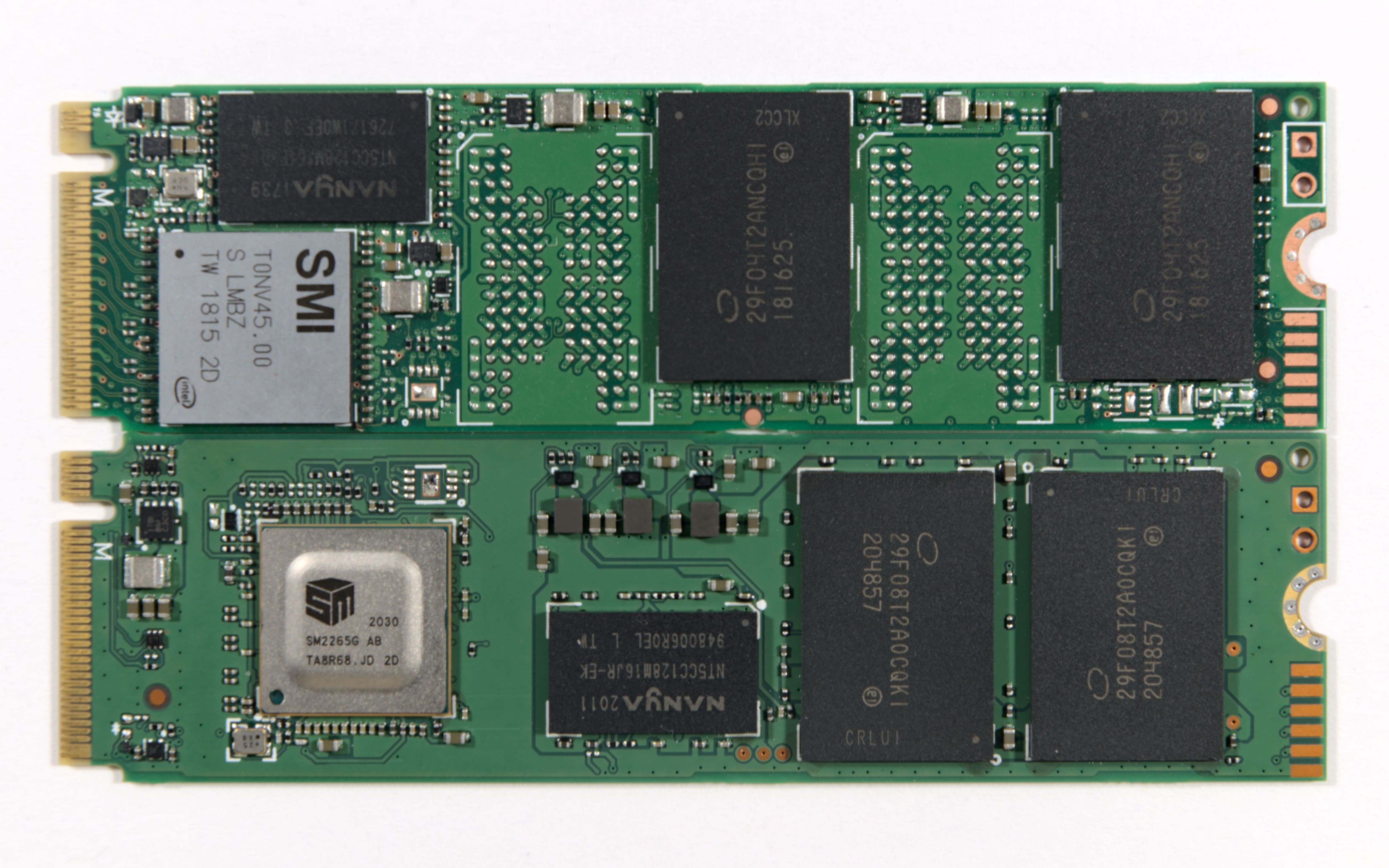
The layout of the Intel 670p is a lot less crowded than the 660p/665p: they're now using only two NAND packages to reach 2TB rather than four packages. Since the new 144L QLC is still manufactured with the same 1Tbit capacity per die, Intel's simply stacking more dies in each package. With this layout, Intel could have easily fit a controller the size of the 8-channel SM2262, but for the upcoming Optane Memory H20 they'll need to fit all these components into half the space to make room for the Optane half of that device.

Top: 1TB Intel 660p, Bottom: 2TB Intel 670p

The Competition

Aside from test results for the earlier Intel SSD 660p, this review includes results from the following competing products:

  • Phison E12 SSDs with QLC NAND, represented here by the 1TB Corsair MP400 and 8TB Sabrent Rocket Q
  • Mushkin Helix-L 1TB: TLC NAND and Silicon Motion SM2263XT DRAMless controller
  • HP EX950 2TB: TLC NAND and Silicon Motion SM2262EN 8-channel controller
  • SK hynix Gold P31 1TB: Probably the best 4-channel NVMe SSD on the market
  • Samsung 970 EVO Plus 1TB and 980 PRO 2TB: High-end TLC SSDs supporting PCIe 3.0 and PCIe 4.0 respectively
  • Samsung 870 EVO 1TB and 870 QVO 1TB: The latest TLC and QLC SATA SSDs
  • SK hynix Gold S31 1TB: Mainstream TLC SATA
The Link Lonk


March 02, 2021
https://ift.tt/37XNTxj

The Intel SSD 670p (2TB) Review: Improving QLC, But Crazy Pricing?!? - AnandTech

https://ift.tt/2YXg8Ic
Intel

Intel Kills Off Overclocking-Focused Extended Warranty - Tom's Hardware

proc.indah.link

With no fanfare whatsoever, Intel has discontinued its Performance Tuning Protection Plan (PTPP), an extended warranty plan that offered protection from damage that occurred during overclocking. The company made the announcement via a message delivered on the PTPP website.  

The Performance Tuning Protection Plan was a great insurance plan for owners of Intel's K-series of processors. For a small additional fee, you could squeeze more performance out of your processor without having to worry about it dying. If you had the plan, Intel would issue you a replacement chip to cover damage due to overclocking, no questions asked. Pricing depended on the tier of the processor, but the plans typically cost between $19.99 and $29.99.

It's unknown why Intel decided to kill off the Performance Tuning Protection Plan. Luckily, owners with existing plans can continue to enjoy the coverage as Intel will honor them until the warranty period is up.

By default, Intel covers the Xeon W-3175X for overclocking, so W-3175X owners have nothing to fret about. But for the rest of us that don't own $3,000 processors, there's no safety net for overclocking. 

Here's Intel's message on the unexpected discontinuation of the program:

To PTPP Customers,

The Performance Tuning Protection Plan program has been discontinued.

As customers increasingly overclock with confidence, we are seeing lower demand for the Performance Tuning Protection Plans (PTPP).

As a result, Intel will no longer offer new PTPP plans effective March 1, 2021.

Intel will continue focusing on delivering amazing processors with tuning flexibility and overclocking tools like Intel Performance Maximizer and Intel XTU.

All existing plans will continue to be honored through the duration of the processor warranty period.

For questions, contact Intel Customer Support.

Note about the intel xeon W-31 75X Processor
The intel xeon W-31 75X Processor is automatically covered for overclocking, No additional plan or activation code is required

Thank You,
PTPP Team

The Link Lonk


March 02, 2021 at 03:42AM
https://ift.tt/3kBdiSH

Intel Kills Off Overclocking-Focused Extended Warranty - Tom's Hardware

https://ift.tt/2YXg8Ic
Intel
AMD Radeon RX 6700 XT GPU may launch at March 3 event - AppleInsider

proc.indah.link

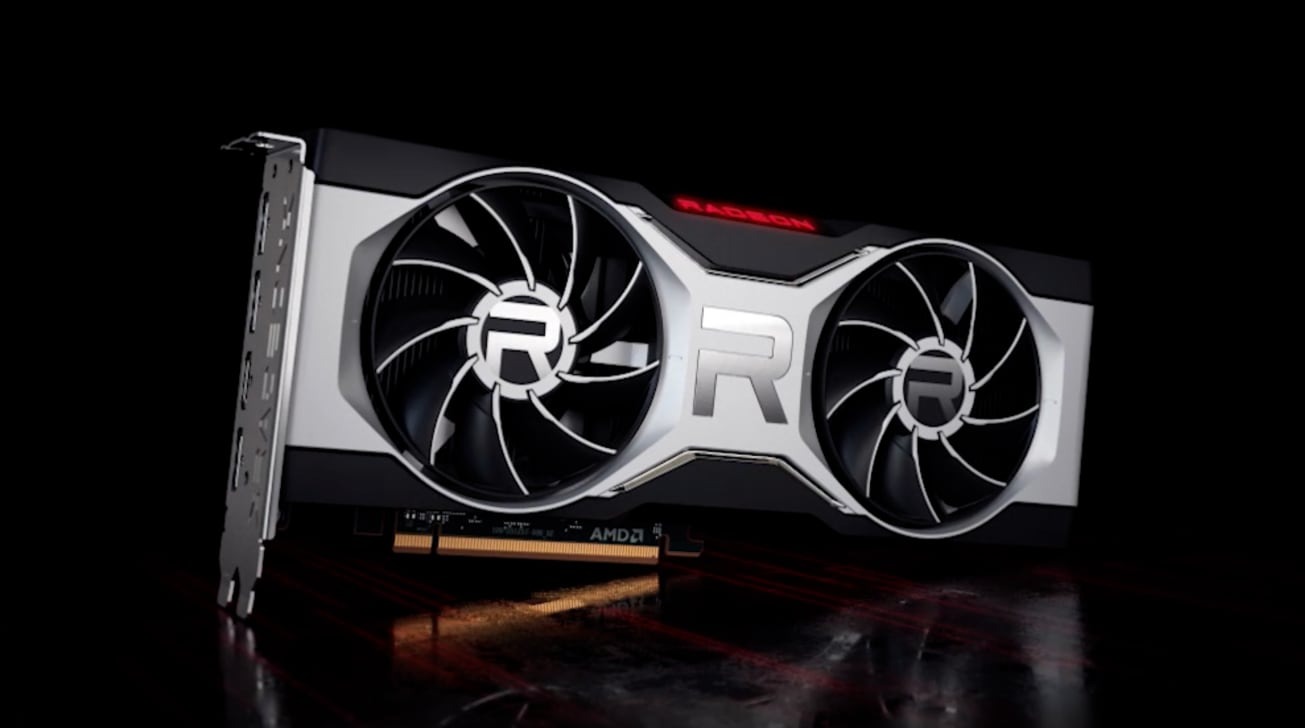
AMD will be expanding its Radeon RX 6000 graphics card line on March 3, with the launch thought to introduce lower-priced options that could eventually be used with the Mac Pro or eGPU solutions.

The first Radeon RX 6000-series GPUs were introduced on October 28, with the RX 6800, RX 6800 XT, and RX 6900 XT unveiled by AMD. In an announcement made on Twitter, AMD plans to add more cards to the range.

The tweet proclaims "the journey continues for RDNA2" at 11 A.M. Eastern on March 3. The event will be the third episode of AMD's "Where Gaming Begins" virtual event streams, and is confirmed via the tweet to include at least one new card.

Current speculation is that AMD's next card will be one that extends the range down toward the value end of the spectrum. Thought to be the Radeon RX 6700 XT, images and details of the cards leaked by VideoCardzon Sunday indicate Asus is already preparing versions for sale.

The RX 6700 XT is believed to use the Navi 22 XT GPU, with a reduced 40 compute units versus the 60 to 80 units offered by the RX 6800 and RX 6900 XT. The core count will also allegedly be reduced to 2,560, well below the 3,840 of the RX 6800.

The card may also switch out the 16GB of GDDR6 memory for 12GB as a cost-saving measure and use a 192-bit memory bus instead of 256-bit. A lower memory bandwidth may also be revealed, with it being capable of up to 384GB/s rather than 512GB/s performed by its stablemates.

It will likely provide some power savings, with a power consumption of up to 230W undercutting the RX 6800's 250W power draw or the 300W of the higher two cards.

Rumors point to a launch date in March 2021 for the card, and potentially a price below $500. For comparison, the RX 6800 was priced at $579 at launch, while the RX 6800 XT cost $649, and the RX 6900 XT was $999.

The card is likely to be a potential future upgrade for Mac Pro users and those with Thunderbolt 3 eGPU enclosures, though not at the moment. Drivers do not yet exist for macOS for the RX 6000-series cards, but are anticipated to arrive soon, given historical trends for addition of support.

Apple's decision to drop Nvidia GPU support in favor of Radeon gives upgradable Mac users few video upgrade options. The launch of more affordable top-end Radeon cards may help press Apple to support them.

The Link Lonk


March 01, 2021 at 10:13PM
https://ift.tt/3sE1S3m

AMD Radeon RX 6700 XT GPU may launch at March 3 event - AppleInsider

https://ift.tt/2ZDueh5
AMD

Featured Post

Intel Falls on Latest Server Chip Delay; Rival AMD Gains - Yahoo Finance

proc.indah.link (Bloomberg) -- Intel Corp. fell after saying a new version of its Xeon server chip line will go into production in 2022, r...

Popular Posts