Rechercher dans ce blog

Friday, October 30, 2020

AMD Reveals More Radeon RX 6000 Series vs. Nvidia RTX 3000 Benchmarks - PCMag

proc.indah.link
(Credit: AMD)

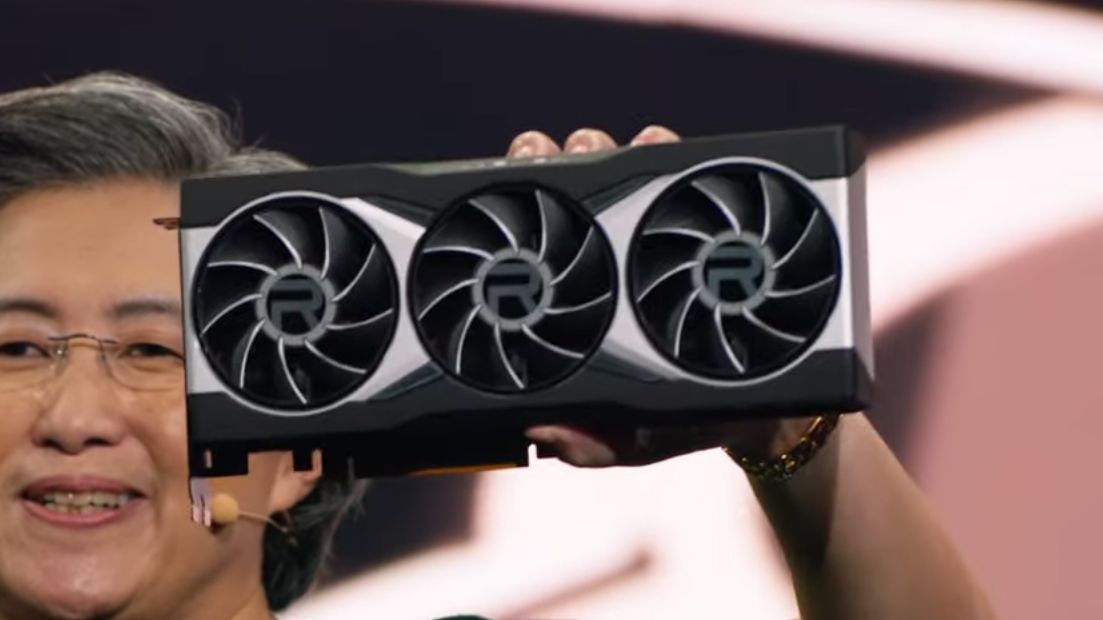
As AMD prepares to release the Radeon RX 6000 graphics cards next month, the company has published additional benchmarks showing how the GPUs fare against Nvidia’s RTX 3000 series. 

You can find the benchmarks on this AMD webpage, which catalogs the performance across 10 PC games, including Doom Eternal, 2019’s Call of Duty Modern Warfare, and Resident Evil 3. 

AMD produced the results in the company’s own labs. So you should take them with a grain of salt. Nevertheless, the webpage does offer a convenient glimpse into the cards’ performance. For example, it lets you toggle between 4K and 1440p benchmarks. It’ll also tell you which graphics setting was used and whether DirectX 12 or the Vulkan API was enabled. 

The other interesting factor is how the benchmarks were produced over a PC unit running AMD’s upcoming Ryzen 9 5900X CPU, which goes on sale Nov. 5. The AMD-exclusive Smart Access Memory technology, which can boost the gaming performance even more, has also been activated on the test rig.

Here are some of the benchmarks; as you can see, AMD’s RX 6000 series doesn't always come out ahead on frames-per-second. A glaring example is the Division 2. Nvidia’s RTX 3090 and 3080 cards both outperform AMD's trio of products.

benchmarkbenchmarkbenchmarkbenchmark(Credit: AMD)

On other games, such as Gears 5, Forza Horizon 4, and Battlefield V, the Radeon RX 6000 series score better. However, the benchmarks can also be toggled to measure the performance by "FPS per dollar"—which is where AMD’s graphics cards can really shine, thanks to their lower retail prices compared to the $1,499 RTX 3090 and $699 RTX 3080.

benchmarkbenchmarkFPS vs FPS/$ for Resident Evil 3 benchmark (Credit: AMD)

Still, there’s a glaring hole in the scores. AMD wasn’t able to test the cards against Nvidia’s RTX 3070, which went on sale yesterday. Although it has a similar performance to the RTX 2080 Ti, the product’s $499 price point makes it the most affordable next-generation GPU between the two companies. 

AMD’s graphics cards, meanwhile, will start at $579 with the RX 6800, and then $649 for the RX 6800 XT. Both go on sale on Nov. 18.

The heavy-duty RX 6900 XT, on the other hand, will arrive on Dec. 8 for $999. Stay tuned for our reviews.

Further Reading

Graphics Card Reviews

Graphics Card Best Picks

The Link Lonk


October 31, 2020 at 04:55AM
https://ift.tt/37WPOTJ

AMD Reveals More Radeon RX 6000 Series vs. Nvidia RTX 3000 Benchmarks - PCMag

https://ift.tt/2ZDueh5
AMD

Early 'reviews' of AMD Ryzen 5 5600X shows it beating Intel Core i9-9900k - TechRadar

proc.indah.link

Two 'early' reviews of the soon to be released AMD Ryzen 7 5800X and Ryzen 5 5600X CPUs show impressive performance gains using the Zen 3 architecture over its predecessor, Zen 2, according to SiSoftware.

The benchmarking software developer posted performance evaluations of the two Ryzen 5000 series CPUs online this week, showing a roughly 15 percent to 40 percent improvement over the previous generation Ryzen 5 3600X for the Ryzen 5 5600X and a roughly 25 to 40 percent improvement for the Ryzen 7 5800X over the Ryzen 7 3700X.

It's speculative at the moment, as Videocardz notes, since it's unclear whether SiSoftware was in possession of review units of the CPUs itself, or whether it was aggregating data from others who were benchmarking the CPUs using its software.

AMD Ryzen 5000 Scores

(Image credit: SiSoftware)

SiSoftware says Ryzen 5 5600X beats Intel Core i9-9900k

In a critical claim by the benchmark maker, the six-core Ryzen 5 5600X was apparently able to beat out the eight-core Intel Core i9-9900k, which would be a major win for Team Red if true. 

SiSoftware also described the performance of the Ryzen 7 5800X as being equivalent to a 12-core Zen 2 processor, like the Ryzen 9 3900X. "We certainly did not expect performance to be this good," the developer said.

We haven't tested the new AMD CPUs ourselves, so it remains to be seen if these numbers hold up, but if they do, Team Red will have come through big in its battle with archrival Intel.

The Link Lonk


October 31, 2020 at 04:35AM
https://ift.tt/3kMEFIs

Early 'reviews' of AMD Ryzen 5 5600X shows it beating Intel Core i9-9900k - TechRadar

https://ift.tt/2ZDueh5
AMD

AMD and Its Chip Rivals Are Making Big Acquisitions. What It Means for Stocks. - Barron's

proc.indah.link
Illustration by Sam Island

Semiconductor deals have reached a frenzy. With more than $100 billion worth of acquisitions announced this year, including two major ones this past week, the chip sector is being rethought and remade by the companies rich enough to strike deals.

The buying frenzy has as much to do with physics as balance sheets. As the billions of transistors that power today’s chips grow closer to a single atom in size, the research and development costs have mounted, steadily increasing to the point where smaller businesses can’t afford the leap to next-generation chips. More than ever, size matters.

“By not addressing your scale, you’re taking a lot of risks, getting yourself into trouble further down the line,” says Pierre Ferragu, an analyst with New Street Research.

The need for scale is one of the arguments that Advanced Micro Devices (ticker: AMD) CEO Lisa Su made to Barron’s this past week, after her company reached a deal to acquire Xilinx (XLNX) for $35 billion. The all-stock transaction, announced Tuesday, values Xilinx shares at $143, roughly a 25% premium to the previous day’s ending price. AMD expects the acquisition to close by the end of next year.

“The semiconductor industry is a high-stakes investment game,” Su said. “From that standpoint, scale is very important. The more scale you have, the broader the solutions you can put together, the more you can do for your customers.”

But with great scale, comes great responsibility—and risk. For years now, AMD has been a fairly straightforward business—building increasingly powerful computer and graphics processing units for computers, videogame consoles, and data centers. Not a simple enterprise, by any means, but one with a clear objective that provided a reason to buy the stock. AMD has executed fabulously well.

Analysts expect the company to generate $9.4 billion in sales this year, up 40% from the total a year ago, with net income more than doubling to $1.5 billion, or $1.22 per share, on an adjusted basis. Analysts forecast earnings to grow another 50% next year. The growth helps explain why AMD shares have soared 126% in the last 12 months.

The Xilinx deal, though, brings AMD into the unknown. Xilinx has long been known for its expertise in so-called field-programmable gate arrays (FPGAs), chips that can be reprogrammed after they are produced. FPGAs are especially useful in emerging technology, such as 5G wireless infrastructure, for which there aren’t yet custom-designed semiconductors. AMD’s chief rival Intel (INTC) made a similar bet on FPGAs when it acquired Altera for $16.7 billion in 2015. That hasn’t exactly been a game changer. Shares of the chip giant have returned just 48% over the past five years, badly trailing the S&P 500 index.

“My first reaction is that AMD is simply following the playbook that Intel has already laid out,” says Brian Bandsma, a portfolio manager at Vontobel Asset Management, says of the Xilinx purchase.

Xilinx sales are projected to shrink 3% this fiscal year, to $3.08 billion from $3.16 billion a year ago. “It doesn’t seem to be a huge growth story right now,” Bandsma says.

One institutional investor tells Barron’s that its fund unloaded its AMD position Tuesday because the stock’s rich multiple—the shares fetch 46 times estimated earnings for the next 12 months—no longer makes sense with Xilinx attached. The growth story has been muddied by non-core businesses, this investor says.

Sure enough, AMD shares fell 4% on the deal news.

“I think we’ve given them a lot of information this morning, so there’s a little bit of digestion,” Su told Barron’s right after the announcement.

If anyone can make the AMD-Xilinx pact work, it’s Su. An engineer by training, she became AMD’s CEO in 2014. Since then, AMD stock has soared 2,200%, compared with a gain of 270% for the PHLX Semiconductor index. Barron’s named Su to its list of the world’s best CEOs in 2019.

“We’ve spent the last five years building an execution machine, and that’s not going to change,” Su says when asked about plans to bring Xilinx into the fold.

“We actually don’t need to do this,” she adds. “The base business is going very well, but in this industry you have to think longer-term, and having access to all of this technology capability and market exposure strengthens AMD for the longer term.”

On Thursday, Marvell Technology Group (MRVL) announced that it is buying fiberoptic-component and data-center chip maker Inphi (IPHI) for $10 billion. The cash and stock transaction values Inphi stock at $157.83 a share—a rich 42% premium to Wednesday’s closing price.

Investors weren’t entirely sold on this deal either. Marvell shares fell 3.3% on the day of the announcement. CEO Matt Murphy told Barron’s that the price is justified, given that Inphi is growing sales at 40% a year.

Here, too, scale is a big part of the rationale, but in a different way. While AMD is looking for new markets, Marvell is doubling down on its existing business, which focuses on data-center chips and wireless infrastructure products. Inphi sells complementary products to many of Marvell’s customers, and its sales are expected to grow 87%, to $682.6 million, this year.

“From a financial point of view, this thing has a kick-butt-looking P&L,” Murphy says of Inphi’s profit and loss statement. “It’s got a lot of revenue growth.”

He adds that scale matters for Marvell because it is using more people and more expensive tools and spending more on manufacturing as it moves to smaller transistors.

“The average cost of a semiconductor advanced node project today is at least $100 million, but if you went back 10 or 15 years ago, it was probably around $10 million,” Murphy says.

“The cost of development and the complexity has gone up so much, that you just have to have enough scale,” he says. “If you invest $100 million in making a chip, you had better sell $500 million of that chip to the right people.”

Write to Max A. Cherney at max.cherney@barrons.com

The Link Lonk


October 31, 2020 at 06:10AM
https://ift.tt/2TFmpVO

AMD and Its Chip Rivals Are Making Big Acquisitions. What It Means for Stocks. - Barron's

https://ift.tt/2ZDueh5
AMD

MediaTek : 2020 Q3 Financial Results - Marketscreener.com

proc.indah.link
Oct 30, 2020 - 3:40 PM The Link Lonk


October 31, 2020 at 12:32AM
https://ift.tt/3eaeskR

MediaTek : 2020 Q3 Financial Results - Marketscreener.com

https://ift.tt/3e1uOdC
Mediatek

MediaTek Q3 profit soars 94% - 台北時報

proc.indah.link

BRIGHT FUTURE: Despite US export restrictions keeping it from selling to Huawei, MediaTek expects its strong momentum to continue as it expands beyond China

  • By Lisa Wang / Staff reporter

MediaTek Inc (聯發科), the world’s second-biggest handset chip supplier, yesterday reported that net profit last quarter skyrocketed about 94 percent year-on-year to a record high, thanks to robust chip demand mainly for 5G smartphones and entry-level Chromebooks due to COVID-19 pandemic-driven remote schooling.

Net profit surged to NT$13.37 billion (US$462.23 million) during the quarter ending on Sept. 30, compared with NT$6.9 billion in the same period last year. That represented quarterly growth of 82.8 percent from NT$7.31 billion.

Gross margin improved to 44.2 percent, compared with 42.1 percent a year earlier and 43.5 percent in the previous quarter.

Photo: David Chang, EPA-EFE

MediaTek expects the strong growth momentum to extend into this quarter, it said.

“Following a strong third quarter, overall demand remains stable. We expect another quarter with significant year-on-year revenue growth,” company CEO Rick Tsai (蔡力行) told an investors’ teleconference.

“On a quarter-on-quarter basis, we expect revenue from mobile computing and growth-area products [Internet of Things, application-specific integrated circuits and power management chips] to be better than normal seasonality,” he said.

Revenue is forecast at NT$89.5 billion to NT$97.3 billion for this quarter, representing a flat quarter, or a quarterly contraction of 8 percent in the worst-case scenario, from last quarter’s NT$97.28 billion.

Last quarter’s revenue hit a record high with each of the company’s three major product lines growing more than 40 percent quarter-on-quarter, the company said.

The fourth-quarter revenue guidance does not include any revenue from Huawei Technologies Co (華為), as MediaTek stopped shipping chips to the Chinese company after the US imposed export restrictions last month, it said.

Gross margin would mostly go unchanged this quarter at about 43.5 percent, even though the company is shipping more low-to-mid-range 5G chips and there are unfavorable foreign-exchange rates, the chipmaker said.

The company said that mainstream 5G phones equipped with its new Dimensity 720 chip are to ramp up this quarter.

It also plans to launch a new 5G system-on-chip (SoC) by the end of this year, targeting mass market 5G phones, it said.

Its new 5G SoC for high-end smartphones would enter mass production early next year, MediaTek said.

The company has a more than 40 percent share of the world’s 5G smartphone market and expects to gain more share next year.

MediaTek is expanding its 5G footprint beyond China with LG Electronics Inc adopting its high-end Dimensity 1000 chip, while China’s Oppo Mobile Telecommunications Corp (歐珀) also plans to launch a new model in Europe with its Dimensity 800 chip.

The chipmaker faces supply constraints for wafers used in power management chips, but expects no significant impact, as the situation is still “manageable,” it said.

To secure sufficient wafer supply, the company said that it has ordered NT$1.62 billion of manufacturing equipment, which it would lease to its wafer suppliers.

Comments will be moderated. Keep comments relevant to the article. Remarks containing abusive and obscene language, personal attacks of any kind or promotion will be removed and the user banned. Final decision will be at the discretion of the Taipei Times.

The Link Lonk


October 30, 2020 at 11:00PM
https://ift.tt/35Mh5oZ

MediaTek Q3 profit soars 94% - 台北時報

https://ift.tt/3e1uOdC
Mediatek

Micromax Confirms New Smartphone Model With MediaTek Processor - MICE News Philippines

proc.indah.link

Micromax has once again announced its entry into the South Asian countries through its smartphone mobile series. The smartphone manufacturing company already has a huge audience base in many countries. It’s been a while since the company has launched its new model smartphone in the global market. After many years of their idle state, the company has shown progress and made the announcement about their upcoming smartphone. It appears that the company will be introducing the “In” series of smartphones in the market. Micromax claims that these new model smartphone series features with MediaTek Helio G35 and Helio G85 SoCs processor as their core internal component. This confirms their feature plan of releasing smartphones through the official Twitter feed. It looks like Micromax will once again bring out a mid-range smartphone at an affordable price.

Based on the information from the internet sources, it’s clear that Micromax is planning to compete against the Chinese smartphone invasion in recent times. Many Chinese manufacturing companies have entered the smartphone market of various countries through their quality products at a minimal price in recent years. This is one of the prime factors that many big giants in the tech industry are continuously working on enhancing their smartphone products to meet the demand of the highly competitive industry. This new model smartphones from Micromax comes with a triple camera setup which has multiple lenses combined with the LED flashlight. The camera setup of the device assures that the smartphone is developed to compete against the modern-day mobiles device which comes with a triple camera and quad-camera setup. Information suggests that these models will have a 5,000mAh battery capacity required to provide power supply for a longer duration.

MediaTek Helio G85 SoC launched during the mid of this year has proven its stability in the real-time environment. Based on the performance of the processor, many companies have started using their processor as their core internal component to enhance the performance of the device. MediaTek announced that these processors are mainly developed to meet the demand of the advanced gaming option. Prior to this, Qualcomm processors were mostly used in the smartphone for gaming options and lightweight processes.  Logic gates used in these processors are capable of delivering a high performance that ensures a smooth flow of everyday tasks. These processors are used in Realme Narzo 20 and Redmi Note 9 smartphone developed by the Chinese manufacturing company. Many budget-friendly smartphones have opted to use MediaTek processor in their smartphone which assures high performance under the low budget category.

It looks like new MediaTek chipsets will be embedded in the upcoming Micromax smartphones which guarantee the smooth flow of the performance. The new series smartphones feature a 6.5-inch HD+ display screen which is capable of delivering multiple application on a single screen. The processor of the device comes with the 3GB of RAM basically used for storing temporary information for easy retrieval. 32GB of onboard storage provided with the device is capable of storing multimedia files and other documents. Even though the smartphone manufacturing company hasn’t made any announcement about the external option for increasing the storage option, it looks like the smartphone comes with the SD card option. It appears like the smartphone coming under the In series will have multiple options in terms of processor and RAM.

The Link Lonk


October 31, 2020 at 12:33AM
https://ift.tt/32097Yq

Micromax Confirms New Smartphone Model With MediaTek Processor - MICE News Philippines

https://ift.tt/3e1uOdC
Mediatek

AMD Big Navi GPUs could be as scarce as Nvidia’s RTX 3000 cards at launch - TechRadar

proc.indah.link

AMD’s Big Navi graphics cards could be in short supply when they first launch, which is doubtless not the rumor gamers on the hunt for a cutting-edge GPU want to hear following the debacle of Nvidia’s RTX 3000 launches.

Bear in mind that this is just speculation, and it’s not from what we’d describe as a concrete source either – although there’s not just one, but a couple of rumor mongers claiming that AMD’s RX 6000 GPUs will be thin on the ground at least initially.

Firstly, a Reddit post highlighted that Polish retailer Morele.net commented that it doesn’t yet know when pre-orders for Big Navi graphics cards will go live, and added to “expect problems with stock as it was with Nvidia GPUs”.

In a similar vein, the second rumor (spotted on Twitter) comes from a denizen of the PTT forums in China, who claims that (via a Google translation): “To be honest, it is quite unexpected that Lisa Su [AMD’s CEO] dares to bet on this release date. I think it should only start to increase in December.

“In fact, the production capacity has always been sufficient, but how much of these production capacity of Navi may depend on Sony and Microsoft's next-gen consoles.”

So in other words, while the Radeon RX 6800 and RX 6800 XT are coming out on November 18, the numbers of GPUs available won’t really get going until December (at least if this speculation is right, of course).

That would be pretty disappointing for those excited about the power of AMD’s graphics cards following the Big Navi reveal, as hopes are certainly up that these GPUs will be a great alternative for those who can’t find an Nvidia RTX 3000 model (pretty much everyone). And also, remember that AMD did already suggest that stock levels would be better than what Nvidia managed (although if these rumor peddlers are right, it might not be much better).

As mentioned by the second source, AMD’s other production demands could be interfering with the amount of Big Navi GPUs that can be produced, including making chips for the PS5 and Xbox Series X, as well as Ryzen CPUs (including new Ryzen 5000 models) and Renoir APUs.

Keep big old handfuls of salt handy, of course, and let’s hope that these speculative nuggets turn out to be well off the mark.

Custom capers

Another interesting – and more positive – rumor floating around courtesy of HardwareLuxx’s editor Andreas Schilling is that AMD is in talks to allow third-party graphics card manufacturers to produce custom RX 6900 XT boards.

Currently, the top-end GPU is only being made by AMD itself, so there are no third-party alternatives (which there are with the 6800 models).

Third-party board makers could potentially produce some pretty juiced-up versions of the RX 6900 XT if allowed, and that might cause Nvidia more trouble. Judging from AMD’s reveal benchmarks, this GPU is seriously powerful already in its reference form, aiming to compete with Nvidia’s flagship RTX 3090.

Via Wccftech

The Link Lonk


October 30, 2020 at 09:00PM
https://ift.tt/3jQ4PZT

AMD Big Navi GPUs could be as scarce as Nvidia’s RTX 3000 cards at launch - TechRadar

https://ift.tt/2ZDueh5
AMD

Featured Post

Intel Falls on Latest Server Chip Delay; Rival AMD Gains - Yahoo Finance

proc.indah.link (Bloomberg) -- Intel Corp. fell after saying a new version of its Xeon server chip line will go into production in 2022, r...

Popular Posts